
The scream that shattered the peace of the Great Dismal Swamp wasn’t human; it was the raw, jagged sound of a mother’s heart being torn open. I was already cinching my utility belt when the radio crackled with the update that every Search and Rescue volunteer dreads: a missing 3-year-old boy, last seen in a white polo, vanished into the suffocating green of the North Carolina wilderness. No tracks, no direction—just two hysterical parents pointing toward a wall of cypress and peat.

“He was right behind me,” the father stammered, his fingers trembling as he gestured toward their half-unpacked SUV. They were setting up camp—a momentary lapse of attention that lasted perhaps forty seconds. In these woods, forty seconds is a lifetime. This isn’t just a forest; it’s a treacherous maze of murky water and tangled vines that can swallow a grown man whole, let alone a toddler.
I watched the sun slip beneath the horizon. We had ninety minutes of daylight left. Once the sun vanished, the temperature would plummet and the swamp would turn into a void. I signaled my crew to form a sweep line. “Keep your eyes on the dirt,” I commanded. “Watch for broken twigs or small footprints. We’re racing the moon.”
The first few hours are fueled by adrenaline; by the fourth hour, the dread begins to rot your stomach. We moved shoulder-to-shoulder, our progress agonizingly slow as we pushed through the thicket. Every rustle of a palmetto leaf sounded like a child’s movement, but it was always a lizard or the wind. The mosquitoes were a thick cloud, a brutal reminder of what a small boy would be enduring out there alone.
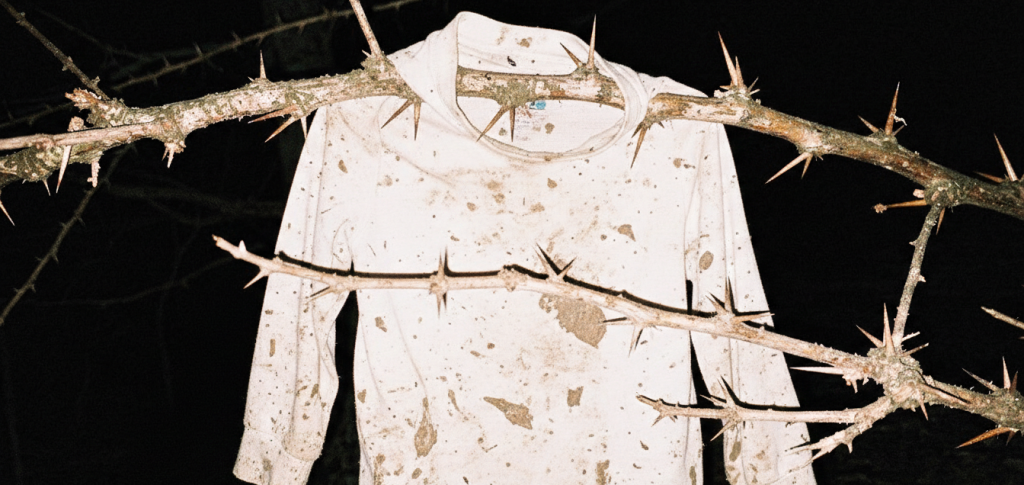
Then, my headset hissed. “Lead, I’ve found a marker.” The voice was taut. I broke rank and scrambled over a rotted stump, rushing to the location. It was nearly half a mile from the trailhead, deep in a section of the swamp choked with briars.
There, draped over a jagged branch like a flag of surrender, was a bright white scrap of fabric. It was his shirt. It wasn’t ripped or snagged—it looked as though it had been purposefully discarded. My heart sank. Why would a child strip off his only layer of protection as the night turned cold?
“Back off,” I barked at the team member moving toward it. “We need the K9s to take the scent.” Finding the shirt changed the math. It meant he had traveled much further than a toddler should be able to navigate in such a short window. But it also meant he was now wandering the wetlands in nothing but his skin as the damp chill set in.
The K9 handler, a quiet veteran named Vance, arrived shortly after. His German Shepherd, Jax, took a long pull of the scent from the white shirt. The dog’s tail went stiff, and he surged into the undergrowth. “He’s on it!” Vance shouted. We struggled to keep pace, our boots sinking into the muck as the last of the light failed.

But the trail didn’t lead to high ground. It led directly into the heart of the mire—a stagnant, ink-black stretch of water that looked like oil under our flashlights. Jax stopped at the muddy bank and began to whine, pacing in circles. The scent had dissolved into the water.
Night in the swamp is heavy. Without a torch, the darkness is absolute, and the light beams play cruel games. Tree roots look like limbs; shadows move like children. Helicopters circled above with infrared sensors, but the cypress canopy was too dense. They were flying blind.
We pushed on, our voices hoarse. “Leo! LEO!” The only answer was the rhythmic thrum of cicadas. By 3:00 AM, the thermometer hit 52 degrees. I knew the math of hypothermia. A child without a shirt doesn’t have the reserves to fight the cold. Every minute that passed wasn’t just time; it was a percentage of his life slipping away.

I found myself bargaining with the dark. Just let him be tucked under a log, sleeping. Suddenly, a sharp snap rang out from the brush to my right. Not the sound of a falling limb—a deliberate weight.
We froze. We cut our lights to listen. For several agonizing seconds, there was nothing but the sound of our own breathing. Then, a rustle. We flooded the thicket with light. A white-tailed deer leapt from the brush and vanished into the trees. The collective groan of the team was audible. Just a deer.
Dawn arrived as a thick, suffocating fog. The atmosphere at the command post had turned grim. No one said the word, but “Rescue” was being replaced by “Recovery” in everyone’s mind. Thirty hours had passed. Volunteers sat on tailgates, staring at the ground with hollow eyes. We had combed miles of terrain. Nothing.

The Lead Ranger gathered us for the morning briefing. “We’re pushing toward the old hunting shacks on the north ridge,” he said, tapping a map. “We did a drive-by last night, but we need boots on the ground at every structure.” It felt like a desperate gesture. If the boy were at a shack, he’d have been seen by now.
I was tasked with checking a small tool shed behind a disused ranger station. I hiked up the incline, my legs screaming with fatigue. The station was a lonely, weathered building standing against the pines.
As I cleared the final rise, I saw a flash of movement on the back steps. A small figure was huddled there, knees tucked to its chin. I stopped, certain my mind was hallucinating from exhaustion. But the figure shifted.
It was him. Leo.
He was barefoot. His shorts were gone, and he was standing there in just a diaper, his skin a roadmap of scratches and welted insect bites. But he wasn’t sobbing. He was just watching me, silent and curious. I hit the radio, my voice thick with emotion. “Found him. I have the subject. He is alert and breathing. Leo is alive.”

When I scooped him up, he didn’t feel like a ghost or a statistic; he felt warm and incredibly solid. He hooked his small arms around my neck and let out a long, tired sigh. He had survived the snakes, the swamp, and the freezing dark, and he looked at me as if he’d just finished a long afternoon of play.
We never did find out how he lost his clothes—perhaps the swamp mud claimed them, or he shed them in a feverish chill—but he had the survival instinct to find a porch and stay put. As I carried him toward the sound of his mother’s frantic, joyful screams, the entire search party stood in a silent line. In this business, the wilderness usually wins. But today, the swamp had to give one back.
Top Articles