

After a moment, he turned and left — no goodbye, no look back. The room felt larger after he was gone, like even the air didn’t know what to do with itself. When Maggie returned later, she found Clara sitting upright for the first time in days, her face pale but composed.
“Sweetheart,” Maggie whispered, “what happened?” Clara turned toward her mother, her voice steady but hollow. “He’s gone.” Maggie reached for her hand, eyes wet. “Then you’ve still got me.” Clara nodded slowly. “That’s all I need.”

Clara squeezed her mother’s hand, the silence between them thick with both exhaustion and understanding. For the first time since her diagnosis, she didn’t feel like she was falling — just suspended, steady enough to breathe. But then things took a turn.
Her counts dropped lower than before. The doctors spoke in hushed tones outside her room, using words like “aggressive treatment” and “limited time.” The next phase of therapy would cost more than Maggie had — more than either of them could imagine.
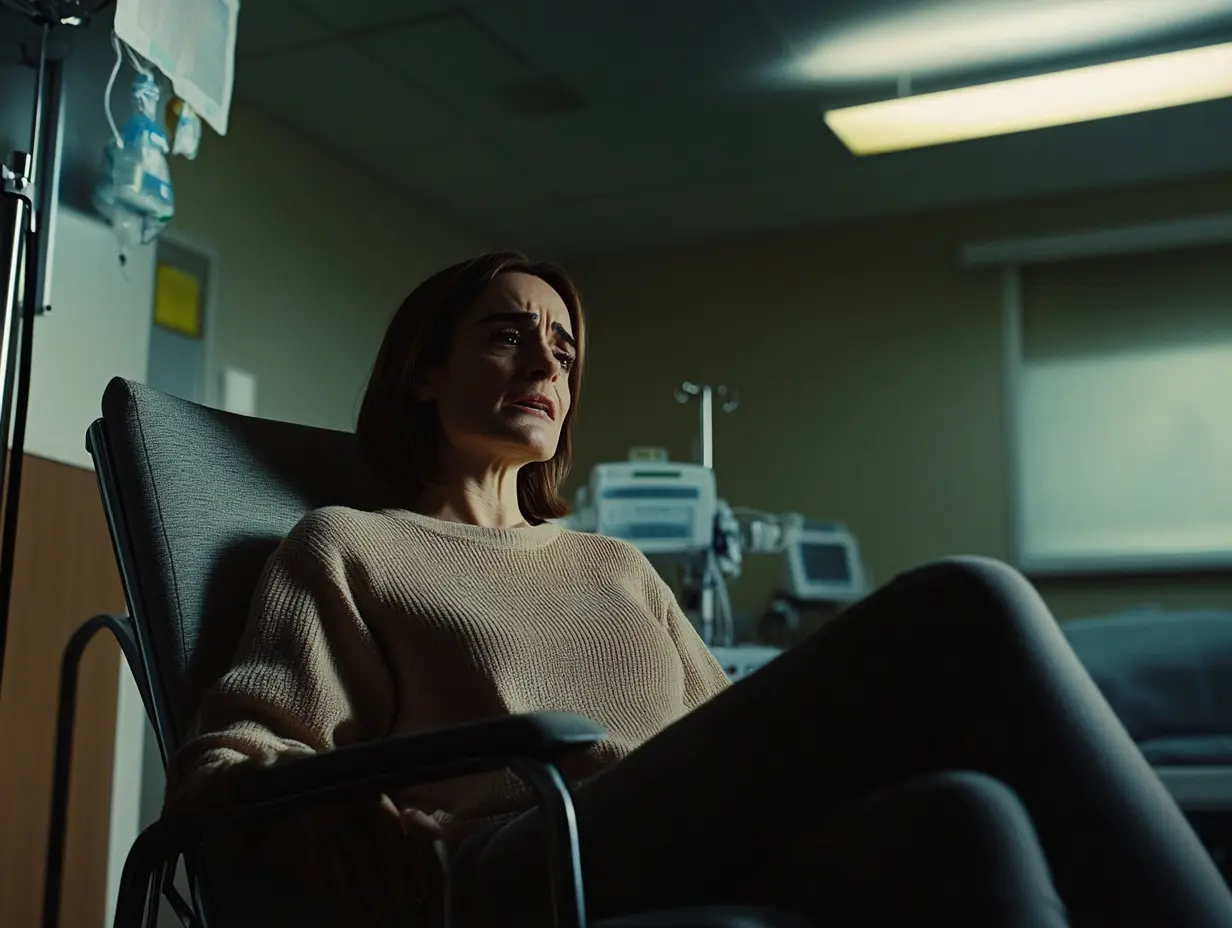
Maggie spent hours on the phone with the billing office, her voice polite but fraying. Every night she told Clara not to worry, but the dark crescents under her eyes said otherwise. That evening, Clara’s fever climbed sharply. Her breaths came shallow, her fingers trembling as she reached for her mother’s arm. “Call him,” she whispered. “Just… call Evan.”
Maggie hesitated, then nodded, stepping into the hallway. Clara heard only her mother’s voice through the thin wall — low, steady, trying not to break. “Evan, it’s Maggie,” she began. “Clara’s not well. The doctors say she needs another round of treatment — soon. I’m asking if you can help, or at least be here for her.”
Top Articles