The Concrete Ghost Ship: The Rise and Fall of Hashima Island
 3View gallery
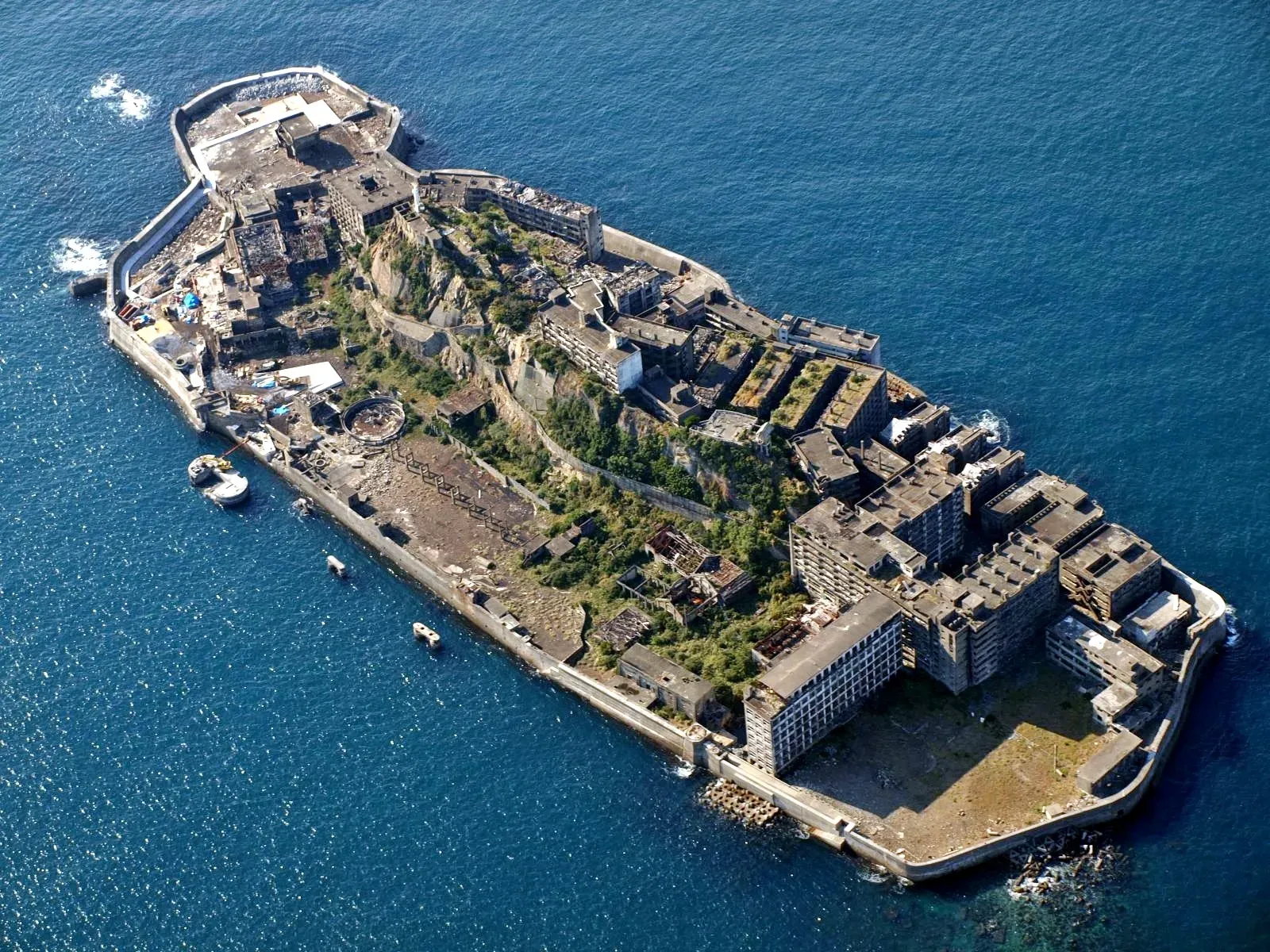
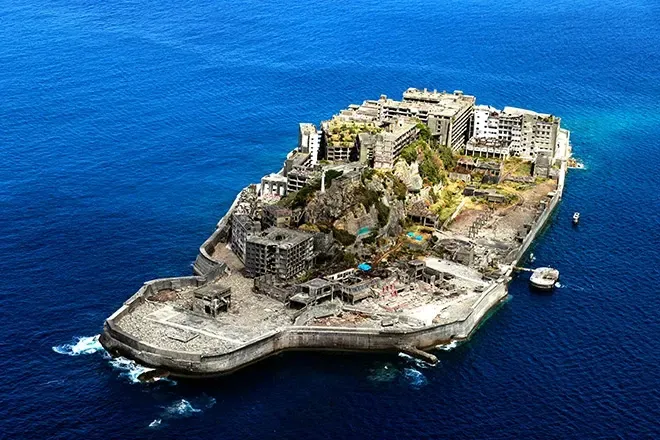
Just off the coast of Nagasaki, Japan, a surreal silhouette rises from the churning waves of the East China Sea. From a distance, it looks exactly like a massive, heavily armored battleship cutting through the water. But as you draw closer, the illusion shatters. It is an island entirely encased in sea walls and towering, hollowed-out concrete apartment blocks.
Step onto the cracked pavements of Hashima Island, and you will find rusted bicycles, decaying televisions, and shattered teacups still sitting on forgotten tables. How did this isolated, storm-battered rock become one of the most densely populated places on Earth, and why did its thousands of residents vanish so abruptly?
Black Gold Beneath the Waves
The story of Hashima—often called Gunkanjima (Battleship Island)—began in the late 19th century with the discovery of a highly valuable resource: undersea coal.
As Japan rapidly industrialized, the demand for fuel skyrocketed. In 1890, the Mitsubishi corporation bought the small reef and began tunneling deep beneath the ocean floor. The coal veins were vast, and soon, thousands of workers and their families flocked to the tiny island seeking high-paying jobs in the dark, sweltering mines beneath the sea.
A Vertical City at Sea
Because the island was only 16 acres in size, there was nowhere to build but up. To protect the residents from devastating Pacific typhoons, Mitsubishi built Japan’s very first large-scale reinforced concrete apartment buildings—some reaching nine stories high.
Hashima became a marvel of modern engineering. At its peak in 1959, over 5,200 people lived on this tiny speck of rock, making it the most densely populated place on the planet.
Despite its harsh, isolated location, the island was a thriving, self-contained metropolis. It featured a movie theater, a hospital, schools, public baths, rooftop gardens, a swimming pool, and a pachinko parlor. It was a bustling concrete labyrinth where residents lived shoulder-to-shoulder, completely surrounded by the vast ocean.
The Sudden Exodus
So why did this floating fortress become a ghost town? In the 1960s, the global economy underwent a massive shift. Petroleum began to replace coal as the world’s primary energy source. Coal mines across Japan started shutting down, and the underwater tunnels of Hashima were no exception.
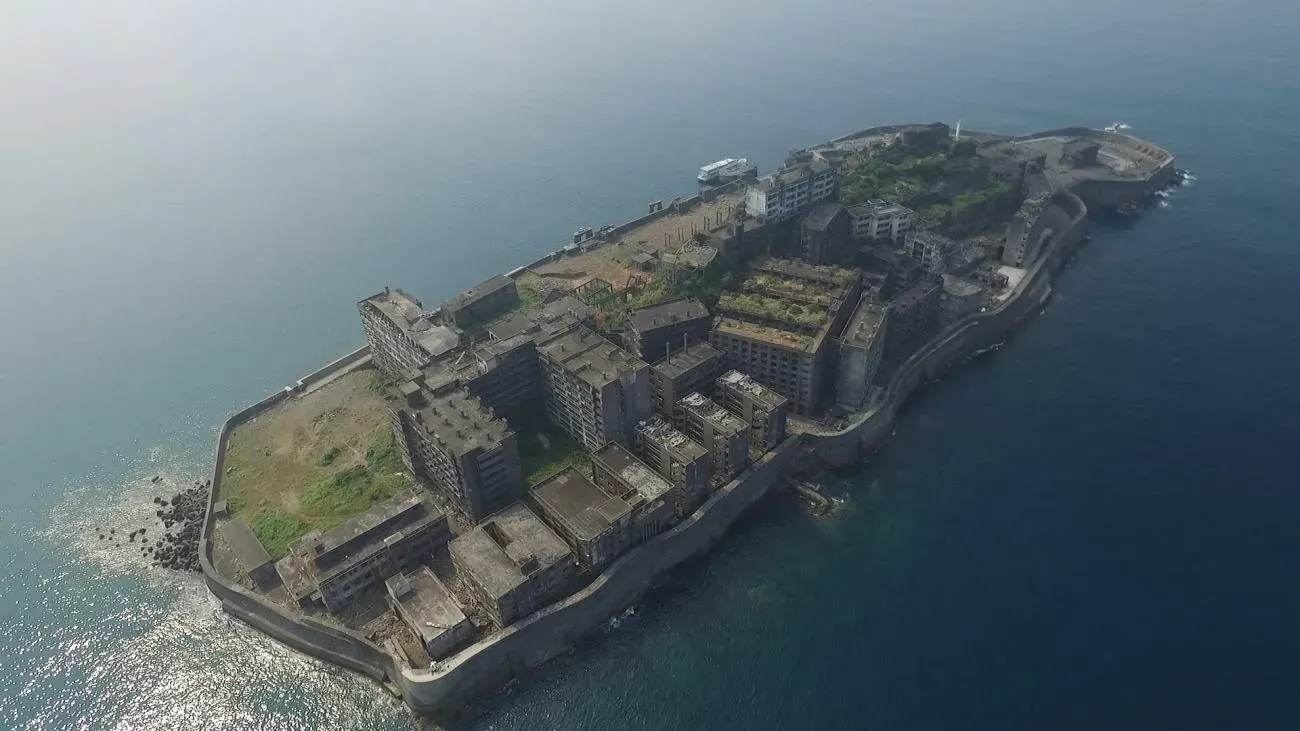
In January 1974, Mitsubishi officially announced the closure of the mine. What followed was a mass exodus of unprecedented speed. Because space on the departing ferries was strictly limited, and moving heavy items back to the mainland was too expensive, residents left almost everything behind. Within mere months, a city that took nearly a century to build was completely abandoned.
Reclaimed by the Ocean
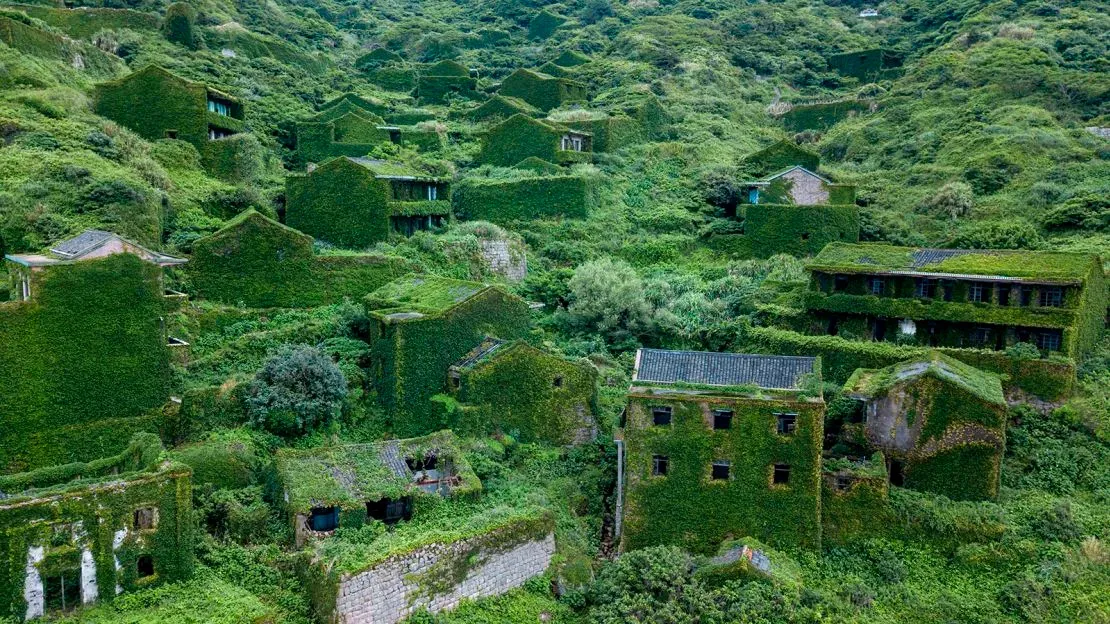
Once the hum of the mining machinery stopped and the people departed, Hashima was left to the mercy of the elements. For decades, violent typhoons and corrosive saltwater have battered the island. Concrete walls have collapsed, iron staircases have rusted away into red dust, and wild vines have pushed through the cracks of the once-pristine rooftop gardens.
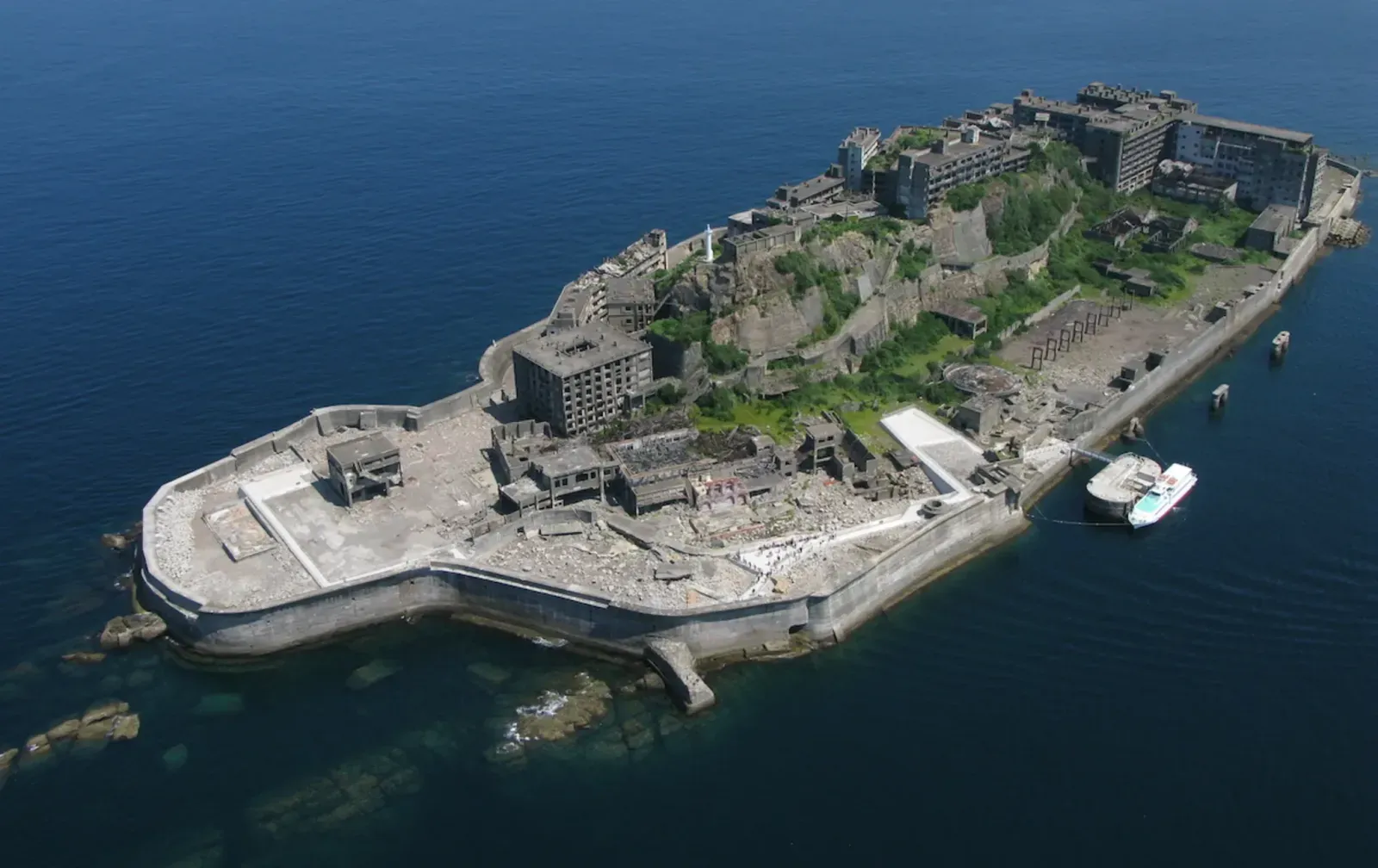
Today, Hashima Island stands as a post-apocalyptic time capsule. Visitors and urban explorers who gaze at its crumbling facades are reminded of the fleeting nature of industrial triumphs. It is a haunting monument to human ingenuity, standing silently as the ocean slowly reclaims its stolen land.