
Mia was burning. As Mark held her, her skin felt like a live wire—too hot to touch, her small body terrifyingly limp. She wasn’t screaming. That was the detail that chilled Mark to the bone. Babies are supposed to cry when they’re in pain, but Mia only offered a single, fragile whimper that dissolved into the air. Her head hung heavy against his shoulder as Clara’s hands shook, fumbling with the digital thermometer.

The screen flashed a number that didn’t seem real. It was dangerously high. Clara stifled a sob. Mark was already in motion—grabbing keys, kicking aside the diaper bag, his mind spinning in frantic, jagged circles. What did she eat? Did she fall? How did we miss this? Just yesterday, she was a whirlwind of giggles and reach-for-me hugs. Now, she was slipping away in his arms.
Outside, the Chicago night was hauntingly still as they bolted for the car. Mia’s breathing was shallow, a ragged rhythm that didn’t match her tiny heart. Somewhere between their front door and the ER, a sickening realization took root in Mark’s gut: This wasn’t an accident. This had been building, a hidden storm they were only just beginning to uncover.

Mark Vance used to think joy would be loud—a grand, cinematic explosion of success. But when Mia finally arrived, happiness was a quiet, heavy warmth. She was small, delicate, and the most precious thing he had ever touched. He remembered that first night in the hospital, paralyzed by the fear that his mere presence might break her.
Clara had watched him from the bed, exhausted but glowing. “She’s sturdier than she looks, Mark. You can breathe.” But to him, Mia was glass. She was the answer to years of hollow disappointment—years of clinical waiting rooms, hushed test results, and the stinging pain of seeing friends celebrate their own growing families while they remained stuck in silence.

When Clara finally showed him the positive test, Mark had collapsed on the kitchen tile and wept. Mia’s birth followed a grueling, high-risk pregnancy, but she arrived perfect.
They didn’t have a safety net. Mark worked grueling shifts as a lead technician for a downtown firm; Clara managed a high-stress logistics team. Their life was a series of careful calculations in a cramped apartment with thin walls and a view of a brick alley.

The early months were a blur of midnight feedings and milestone “firsts.” The first time she gripped Mark’s hand, he felt like the most important man on earth. But as Mia turned two—becoming a chatty, vibrant toddler with a laugh that could wake the neighbors—reality hit hard.
Clara’s maternity leave was a distant memory, and the cost of quality daycare was astronomical. Some months, it exceeded their rent. Every “affordable” option felt like a dangerous gamble they weren’t willing to take with their miracle child.
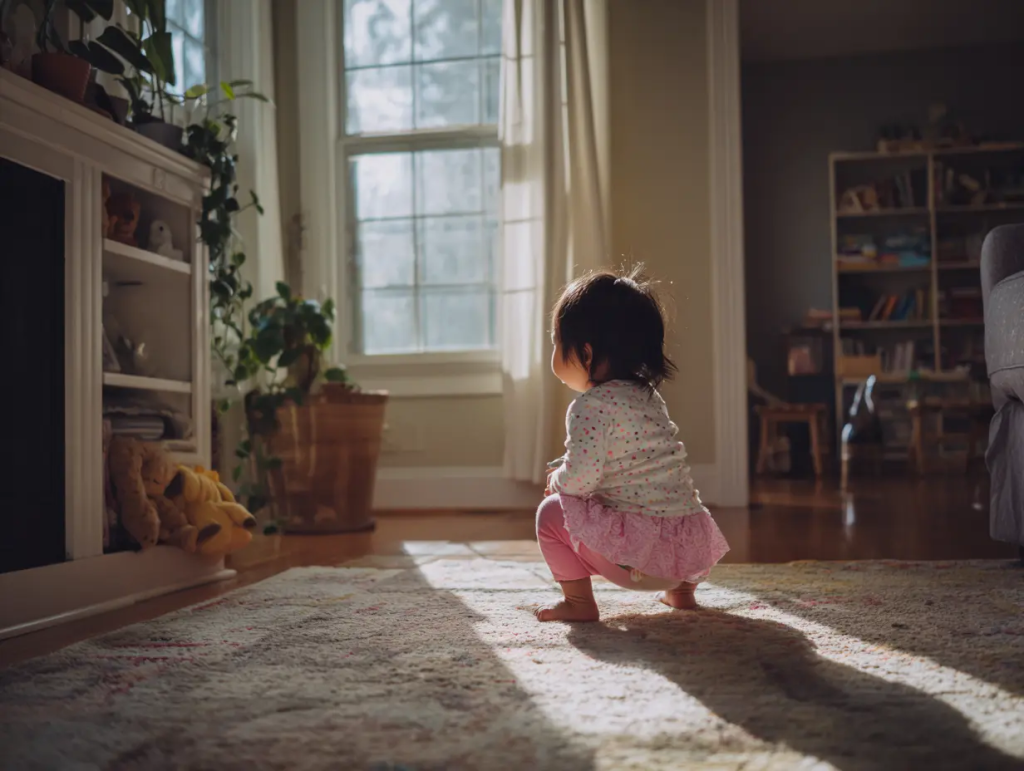
“I can’t leave her with strangers,” Clara whispered one night, her voice thick with exhaustion. “She’s too young.” Mark felt the same knot of dread. That’s when Clara brought up her mother, Evelyn Sterling.
Evelyn wasn’t a “bad” woman, but she was… precise. A widow who had raised Clara solo, she wore her self-sufficiency like a suit of armor. She believed that “grandmotherly intuition” trumped any modern medical book and that rules were merely suggestions for people without her experience.
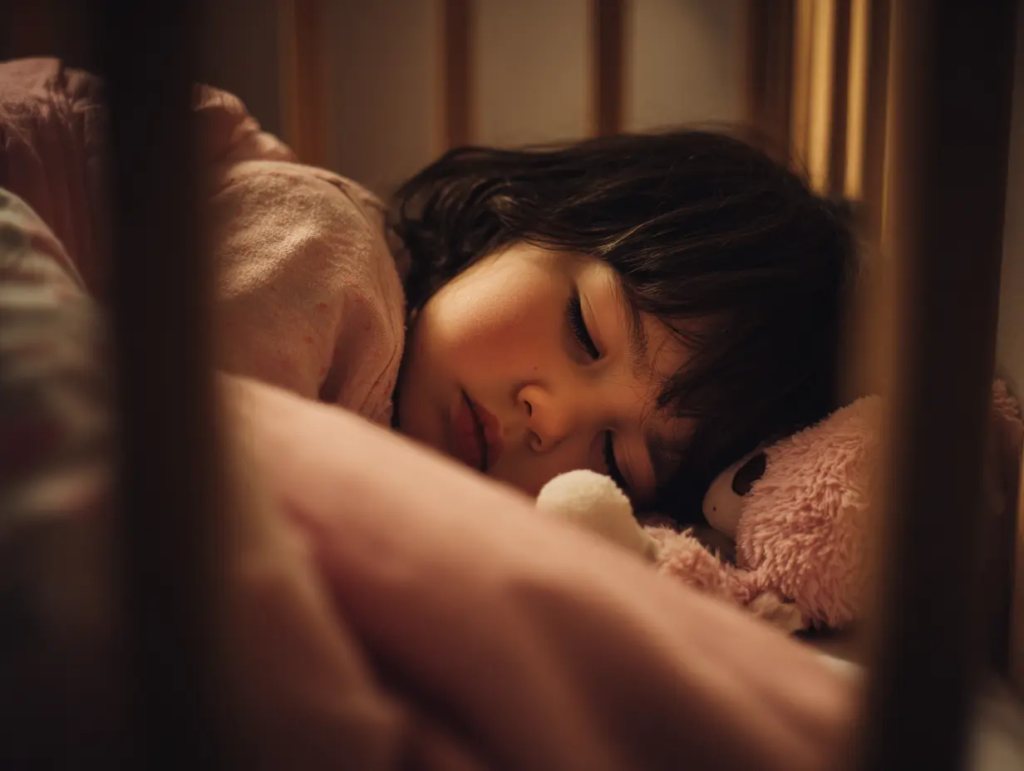
“She knows what she’s doing,” Clara urged. “She raised me, and Mia adores her.” It was true. Mia lit up whenever Evelyn walked in, reaching for her with a rare, exuberant energy. Evelyn would tuck the toddler against her hip with a practiced, commanding confidence.
Mark felt a familiar tightening in his chest. It wasn’t that he didn’t trust Evelyn, but the circle of people he allowed near Mia’s well-being was incredibly small. Himself. Clara. That was the list.
“It’s just temporary,” Clara promised. “Until we get our feet under us.”
So, the routine began. Every weekday, they packed Mia’s bag—her favorite snacks, a change of clothes, and the tattered stuffed wolf she couldn’t nap without. They’d drop her off at Evelyn’s pristine, orderly home.
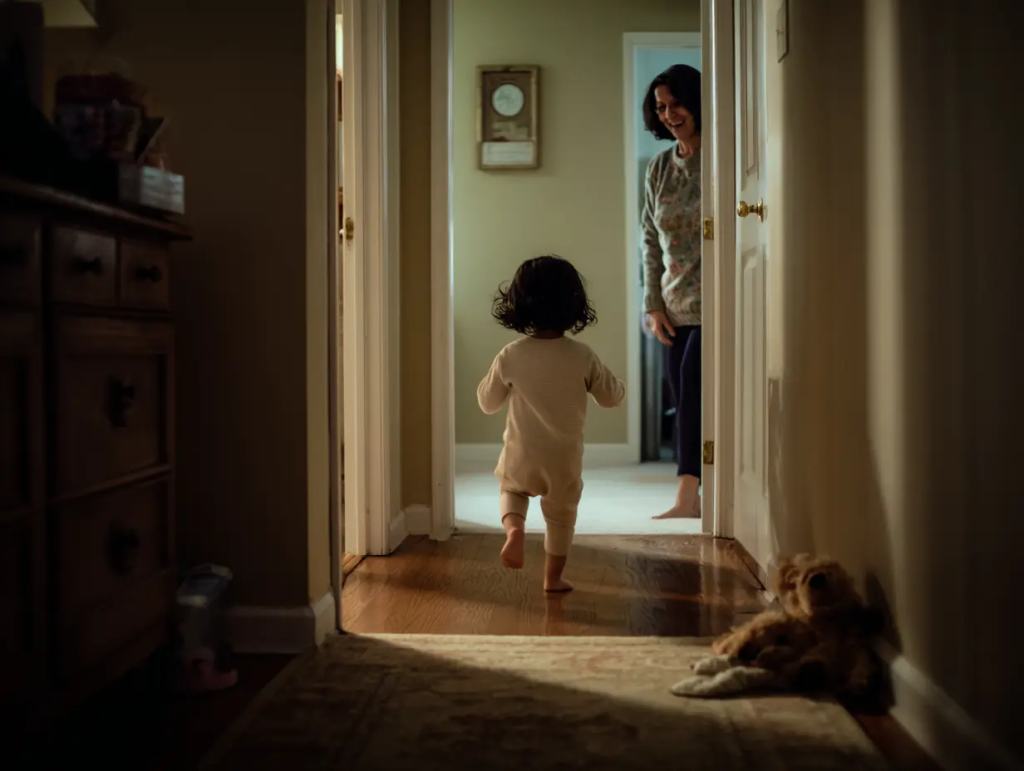
Evelyn was a woman of “natural” ways. She despised “overstimulating” noise, cooked everything from scratch, and spoke with the unwavering authority of someone who had seen it all.
“She’s just old-school,” Clara would say when Mark questioned Evelyn’s odd suggestions. “She means well.”
For the first few weeks, the plan worked perfectly. Evelyn reported long, peaceful naps and impeccable behavior. But beneath the surface of those “peaceful naps,” something was beginning to go horribly wrong.

She talked about the baby the way people talk about something they believe belongs partly to them. Then small things shifted.Maxine slept more. Too much, maybe. She wasn’t fussy—just quiet. When Mike picked her up after work, she felt heavier in his arms, not because she’d gained weight, but because she didn’t push back. Didn’t wriggle. Didn’t reach.
“She’s just tired,” Eleanor said lightly. “Babies grow in phases.”Carrie nodded, relieved to accept an explanation. Mike watched. Not accusing. Just noticing. He told himself not to read into it. They had wanted this help. Needed it. Eleanor was family.

The first thing Mike really noticed was the silence. Maxine had always made noise before. Small sounds, but constant ones—little hums, half-formed words, the occasional squeal when something caught her attention. Now, when he arrived at Eleanor’s house in the evenings, the rooms felt muted in a way that had nothing to do with Eleanor’s insistence on calm.
Maxine was usually in her grandmother’s arms, eyes half-lidded, her head resting heavily against Eleanor’s shoulder. She didn’t twist to look at the door anymore. Didn’t lift her arms. “She’s been so peaceful today,” Eleanor would say, smoothing Maxine’s hair.
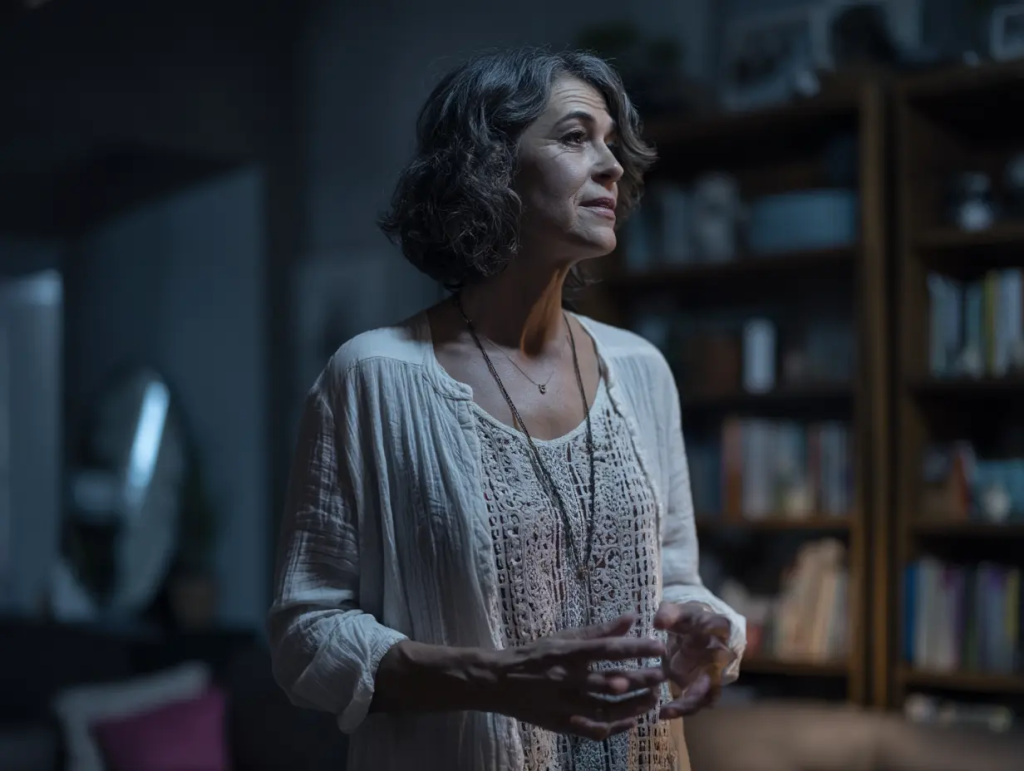
“You’re lucky. Some parents would kill for a child this easy.” Mike smiled when expected. Kissed his daughter’s forehead. Told himself not to linger on how cool her skin felt. Carrie noticed things too, but she framed them differently. She always had.
“I know I keep asking if it’s a growth spurt,” she said one night, scrubbing a pan that was already clean, “but… this doesn’t feel normal anymore.” Mike nodded. “It’s not random,” he said. “It’s patterned.” Weekends felt different.

On Saturdays, when Maxine stayed home with them, she fussed. She cried. She demanded attention in ways that were exhausting but familiar. By Sunday afternoon, she smiled again—hesitant at first, then wider.
By Monday evening, Maxine was quiet once more.Mike didn’t write it down. He just counted. Days with Eleanor. Days without. One afternoon, they stayed longer than usual at Eleanor’s house, lingering in the kitchen while Maxine played on the back patio. The late light slanted through the windows, warm and deceptive.

Eleanor was mid-sentence when something moved outside. Fast. Carrie startled, turning toward the glass. “Did you see that?” Mike was already there. The garden lay still for a second—too still. Then something darted past the fence line, low and quick. Eleanor jumped this time, a sharp sound leaving her throat.“What was that?” Carrie asked.
They stepped closer to the window. A blur slipped between the plants and vanished through the far corner of the yard. A moment later, a tail flicked into view. “A cat,” Eleanor said, exhaling. “Just a cat.” Relief came quickly. Too quickly. Mike’s eyes stayed on the fence. One of the lower boards had shifted, loose enough for something small to squeeze through.
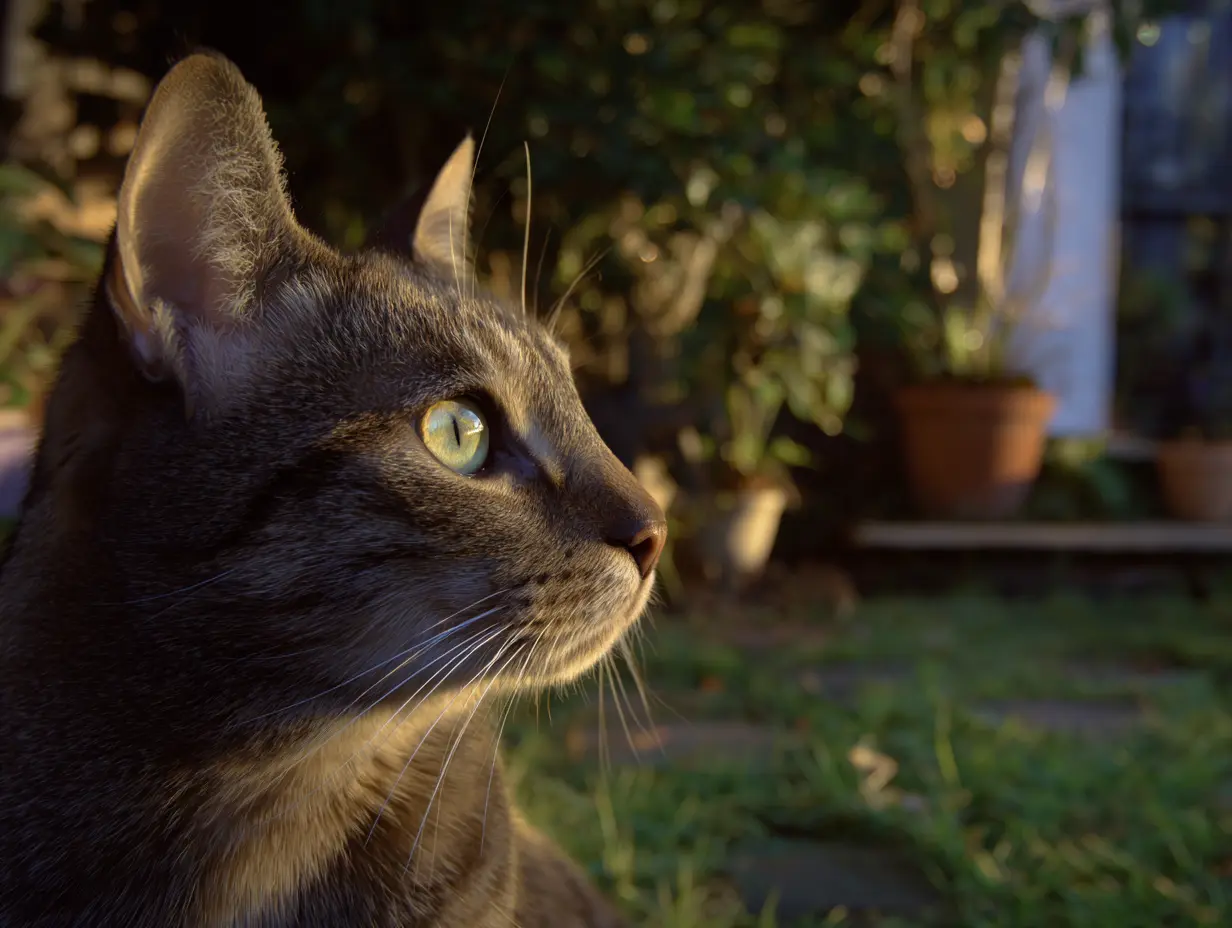
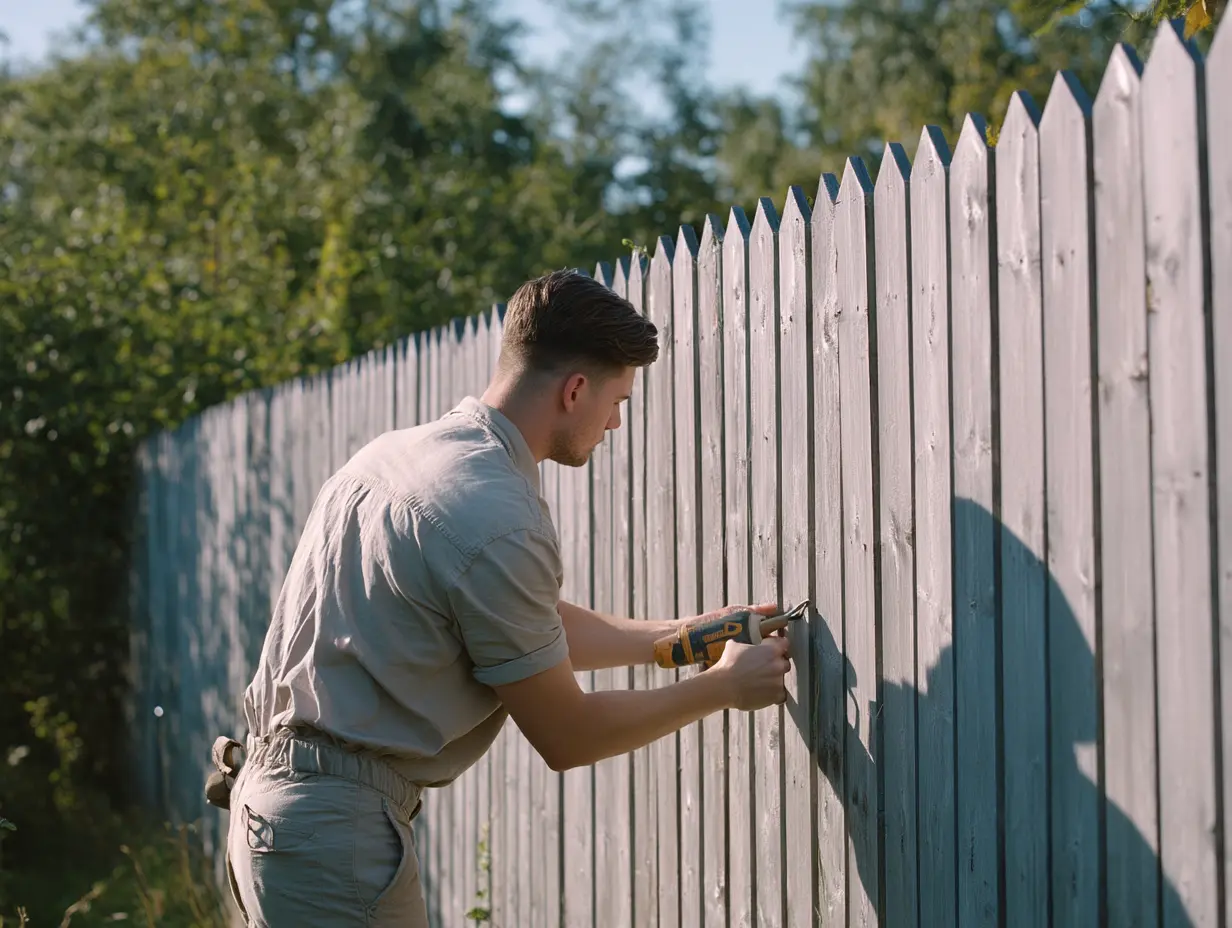
Near the flowerbed Maxine liked to dig in, dark clumps dotted the soil. “That’s new,” Mike said. Carrie followed his gaze. “Could she be allergic?” she asked. “That would explain the fevers.” It made sense. Too much sense. The kind of explanation that slides neatly into place and asks no further questions. Mike crouched, inspecting the gap. “I’ll fix it,” he said immediately.
He did it that weekend. Hammering boards back into place. Reinforcing the corner. Scrubbing the stones near the garden bed until his hands ached. Each nail driven felt like action. Control. Hope. For a moment, it worked. And then nothing changed. Maxine’s fevers returned by Wednesday. Then came the tea.
It slipped out casually, the way harmless things often do. Carrie was bathing Maxine when their daughter touched the water and murmured something soft and garbled. “Flower,” Maxine said. Carrie laughed, then paused. “Flower?” “Flower tea.” Carrie looked up slowly. “Mom,” she called. “What kind of tea have you been giving her?”
Eleanor appeared in the doorway before the question had fully landed. “It’s our routine,” she said. “Maxine and I pick flowers from the garden together. She loves it. We make tea.” Mike’s stomach tightened. “Flowers?” he asked. “Are you sure they’re safe for a child to ingest?” Eleanor’s expression hardened. “It’s all natural. I’ve been drinking the same teas for years.

And I only grow the best ones in my garden. Trust me—nothing harmful comes out of my soil.” The way she said it—final, unquestioning—made Mike nod when he shouldn’t have. They asked her to stop anyway. Eleanor agreed too quickly. “Fine,” she said, smiling thinly. “If it makes you feel better.”
For a few days, it did. Maxine slept better. She laughed once—a soft, startled sound that made Carrie freeze mid-step and smile like she’d just been handed proof. Then the fever came back. Higher this time. By Friday, Maxine wouldn’t eat.

“I keep asking myself what I’m missing,” Mike said quietly that night, standing beside the crib. “What’s wrong with my child?” Carrie didn’t answer. She didn’t have one. The next morning, Mike arrived early at Eleanor’s house without calling ahead. The place smelled faintly floral. Not unpleasant. Just unfamiliar.
Eleanor stood at the counter with her back to him, pouring something from a small pot into a mug. Maxine sat in her booster seat, feet kicking weakly, eyes fixed on the cup. Mike stopped just inside the doorway. “What’s that?” he asked. Eleanor startled, nearly spilling the liquid. She turned too quickly, the mug clutched tight in her hand. “Nothing,” she said at once.

“Just warm water.” Maxine let out a small sound—half whine, half plea—and reached for the cup. “It’s tea,” Mike said flatly. Eleanor’s shoulders stiffened. “She asked for it.” We asked you not to,” he replied. Eleanor’s mouth pressed into a thin line. “I wasn’t going to deny her something that soothes her,” she said.
“You don’t refuse a child when they’re asking for comfort.” Mike stepped closer. He could see bits of plant matter clinging to the rim of the mug. Tiny petals. Pale stems. “You don’t know what she’s ingesting,” he said. “I know my garden,” Eleanor snapped. “Better than you ever will.” That night, after they brought Maxine home, her fever climbed higher than it ever had before.

By morning, she wouldn’t wake. At first, Mike told himself she was just sleeping deeply. Babies did that. But when her eyelids didn’t flutter at his touch and her body stayed limp against his chest, fear hit him so fast it stole his breath.
Carrie didn’t wait for him to speak. She was already dialing, her voice cracking as she described the fever, the lethargy, the way their daughter hadn’t responded at all. Bring her in now, the nurse said. The emergency room was a blur of motion and clipped voices. Maxine was taken from Mike’s arms almost immediately. A nurse called out her temperature.

Another placed a tiny oxygen monitor on her foot. Carrie stood frozen until Mike pulled her back into motion, both of them answering questions they barely processed. Then Maxine vomited. It was sudden and violent, her small body jerking as the nurse turned her on her side. The smell was sharp, sour, unmistakably wrong.
Mike felt his stomach drop as a doctor stepped in, expression tightening. “That’s important,” he said quietly. They moved quickly after that. Fluids. Bloodwork. Monitoring. When the doctor returned, he didn’t sugarcoat it. “We’re concerned”

Her stomach is irritated, and it’s been happening for a while.” The word poisoning lodged in Mike’s chest like a splinter. Carrie shook her head. “That doesn’t make sense. She eats what we give her. We’re careful.” The doctor nodded. “I believe you. But babies don’t get this sick without repeated exposure. We need to know everything she’s been consuming.
Not just meals. Liquids. Supplements. Anything outside the usual.” Mike felt heat rise up his spine. “The tea,” he said suddenly. Carrie turned toward him. “What?” “My mother-in-law,” Mike said, the words coming faster now. “She watches Maxine during the week. She’s been giving her herbal tea. Said it was natural. From her garden.”

The doctor’s brow furrowed immediately. “Tea?” he repeated. “What kind of tea?” “She said chamomile. Flowers. Other things,” Mike said, anger sharpening his voice. “We told her to stop.” The doctor exchanged a look with the nurse beside him. The pediatrician listened without interrupting.
Mike stood rigid beside the hospital bed, arms crossed, while Carrie spoke in short, careful bursts—about the fevers, the weight loss, the fatigue that came and went without warning. About Eleanor. About the tea. When Carrie finished, the doctor nodded once. He didn’t look surprised.

“I want to be very clear,” he said. “It’s highly unlikely that properly prepared herbal tea caused this.” Mike felt a strange flicker of relief—and immediately after, dread. “So it’s not the flowers?” Carrie asked.
“Not in the way you’re thinking,” the doctor replied. “Most common herbs would cause stomach upset at worst. Nausea. Maybe mild dehydration. They don’t explain malnutrition, recurring fever, or this level of lethargy.”
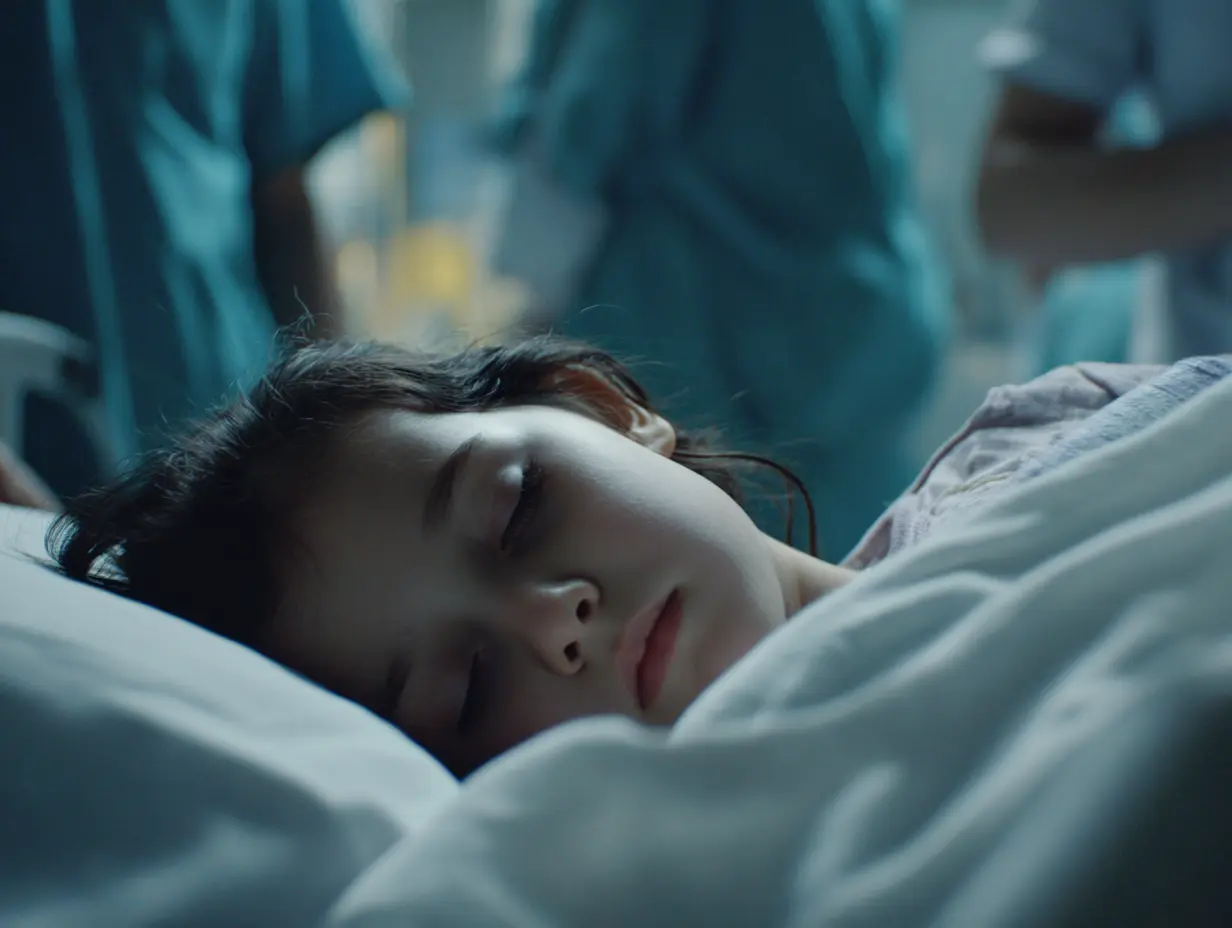
He gestured gently toward Maxine, small and still beneath the blanket. “This looks like repeated exposure to something her body can’t process,” he continued. “Not a one-time ingestion. And not something she should have been consuming at all.”
Mike swallowed. “You’re saying… poisoning?” The doctor hesitated. Just long enough. “I’m saying we need to identify everything she’s been in contact with,” he said carefully. “Food. Drink. Environment. We’ll test the tea ingredients to be thorough—but I don’t expect them to be the source.”

Carrie’s voice cracked. “Then what is?” “That’s what we’re going to find out,” the doctor said. “But whatever it is, it’s been happening over time.” Mike looked at his daughter again. Her chest rose and fell, shallow but steady. He tried to think backward—days, weeks, patterns.
Nothing made sense. “And the grandmother?” Mike asked quietly. The doctor met his eyes. “I’m not assigning blame,” he said. “But I will need samples from the garden. Soil. Plants. Anything your daughter may have touched.”

Mike nodded. As he stepped into the hallway to make the call, one thought settled heavily in his chest: If it wasn’t the tea— then it was something closer. Eleanor answered on the third ring. “Is she awake?” she asked immediately, voice tight with concern. “I was just about to head over—”
“You need to come to the hospital,” Mike said. He didn’t raise his voice. That scared him more than if he had. “Now. And you need to bring samples from your garden. Everything you’ve been using.” There was a pause. Not confusion. Calculation.

“My garden?” Eleanor said. “Mike, I already told you—” “The doctor wants them,” he cut in. “Flowers. Leaves. Soil. Anything Maxine might have touched.” Another pause. Shorter this time. “I’ll be there,” she said. “Of course I will.”
She arrived forty minutes later, coat buttoned wrong, hair pulled back too tightly, clutching a reusable grocery bag filled with neatly labeled containers. She looked shaken, but composed—like someone determined to prove a point. “I brought everything,” Eleanor said, setting the bag down carefully on the counter. Her voice was brisk, but not sharp.
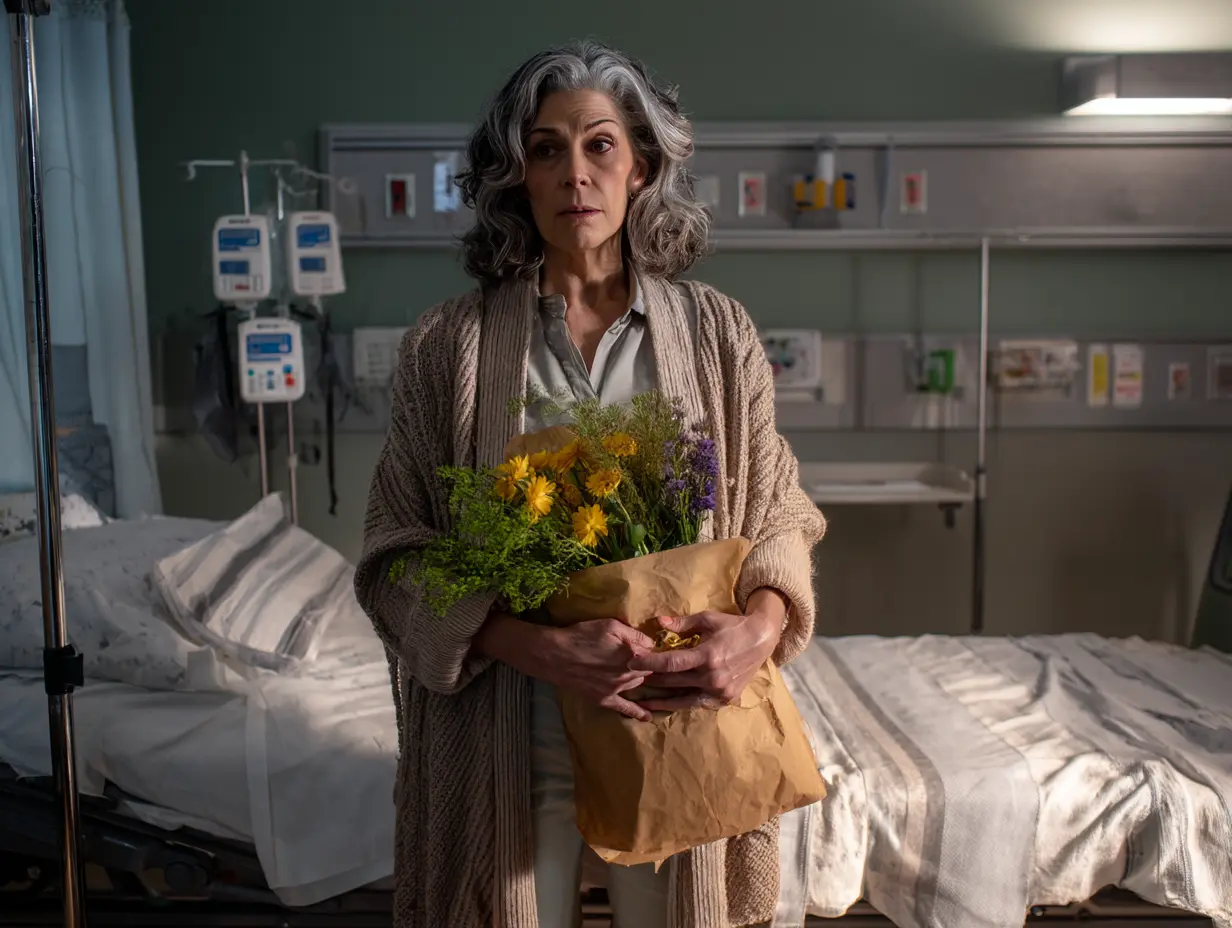
Tired, if anything. “Chamomile. Lavender. A few others. All washed. All things I’ve used myself for years.” The doctor accepted the bag and glanced inside without judgment. “Thank you,” he said. “This helps.” He motioned toward the small consultation room. Mike and Carrie followed as Eleanor took a seat, her hands folded tightly in her lap.
“I need to ask you directly,” the doctor said gently. “While Maxine was in your care, was she given anything other than food, water, or her prescribed medication?”Eleanor hesitated. Just a beat. “I gave her tea,” she said quietly. “A few sips. I didn’t think it would hurt. It calmed her. She liked being part of it.” Her voice wavered, then steadied. “Nothing else. No supplements. No powders. Nothing like that.”

Carrie swallowed. “Mom… we asked you to stop.” “I know,” Eleanor said, turning toward her daughter. Her eyes were glassy now. “And I should have listened. I truly thought it was harmless. I never would’ve given her anything if I thought—” She stopped, shaking her head. The doctor held up a hand, not to interrupt, but to slow the moment.
“It may be nothing,” he said evenly. “Most garden plants are benign, and many cases like this turn out to have unrelated causes. But given Maxine’s symptoms, we need to be thorough. Testing doesn’t mean blame.” Eleanor nodded, wiping at her eyes. “Of course,” she said. “Whatever you need.”

As she stood to leave, she paused at the doorway, looking smaller than Mike had ever seen her. “I love her,” she said softly. “I would never hurt her.” “I know,” the doctor replied. Mike watched her walk down the hallway, unease settling in his chest—not because Eleanor seemed guilty, but because for the first time, no one in the room sounded certain anymore.
Whatever was hurting his daughter hadn’t been explained away. Only narrowed. The waiting stretched. Not the dramatic kind—no alarms, no shouting—just the slow drag of hours marked by nurses coming and going, IV bags checked, charts updated. Maxine slept, her small body curled in on itself, one hand wrapped loosely around Carrie’s finger.

The results came back in stages. First the plants. The pediatrician returned with a thin folder, his expression careful but calmer than before. “The flowers are benign,” he said. “Chamomile. Lavender. Nothing toxic in isolation. Nothing that would explain this level of reaction.” Carrie let out a breath she hadn’t realized she’d been holding.
“So it wasn’t the tea?” “Not directly,” the doctor said. “At least, not from the plants themselves.” Mike felt the floor shift beneath that word. Not directly. “Then what did it?” he asked. Mike broke first. It wasn’t loud. It wasn’t dramatic.

It was the kind of sound that escaped him before he realized he was making it—a sharp breath, then another, his face folding as he turned away from the bed. He pressed his hands to his eyes, furious at himself, terrified of what had been happening to his daughter while he stood there guessing.
“I don’t understand,” he said hoarsely. “We did everything right. We watched her. We took her in. We—” His voice cracked. “Something is hurting her.” Carrie reached for him, but the doctor was already moving again.
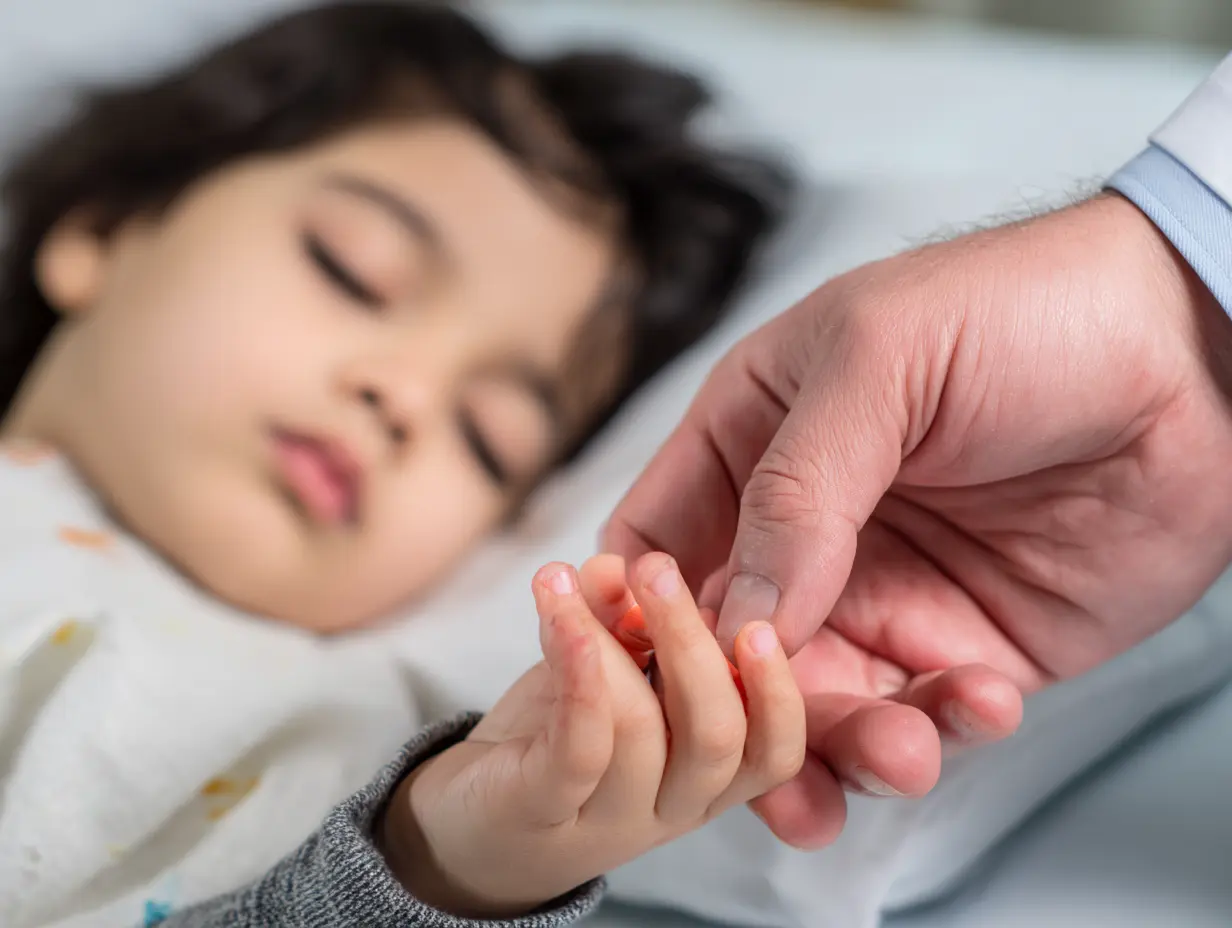
He didn’t speak at first. He stood beside the bed, adjusting the blanket, checking Maxine’s vitals with practiced calm. Then he paused. His fingers hovered, just slightly. He leaned closer, narrowing his eyes—not at her face, not at the monitors, but at her hands.
“Have her nails always looked like this?” he asked quietly. Mike looked up, startled. Maxine’s fingers were small and uneven, the edges of her nails jagged, bitten down to soft, irregular curves. The doctor gently turned her hand under the light.

“She bites them,” Mike said immediately, then hesitated. “She always has. We’ve been trying to stop it.” The words slowed as something clicked into place. “She does it when she’s tired. Or bored.”
The doctor nodded once, his tone changing—not alarmed, but focused. “Has she been outside recently? Playing in soil? A garden?” Mike’s chest tightened. “Eleanor takes her out back every day,” he said. “They dig. She lets her help. Maxine loves it.” For a moment, no one spoke.

“I think,” the doctor said carefully, “we may have found your answer.” He straightened. “We’re going to test what’s under her nails. Immediately.” The waiting came again—but this time it felt sharper, heavier, charged with dread. When the results returned, there was no room left for doubt.
Trace amounts of pesticide. Not enough to harm an adult. But for a child Maxine’s size—repeated exposure, direct ingestion—it explained everything. The fevers. The lethargy. The weight loss. The vomiting. “She wasn’t poisoned intentionally,” the doctor said gently. “But she was exposed. Over time.”
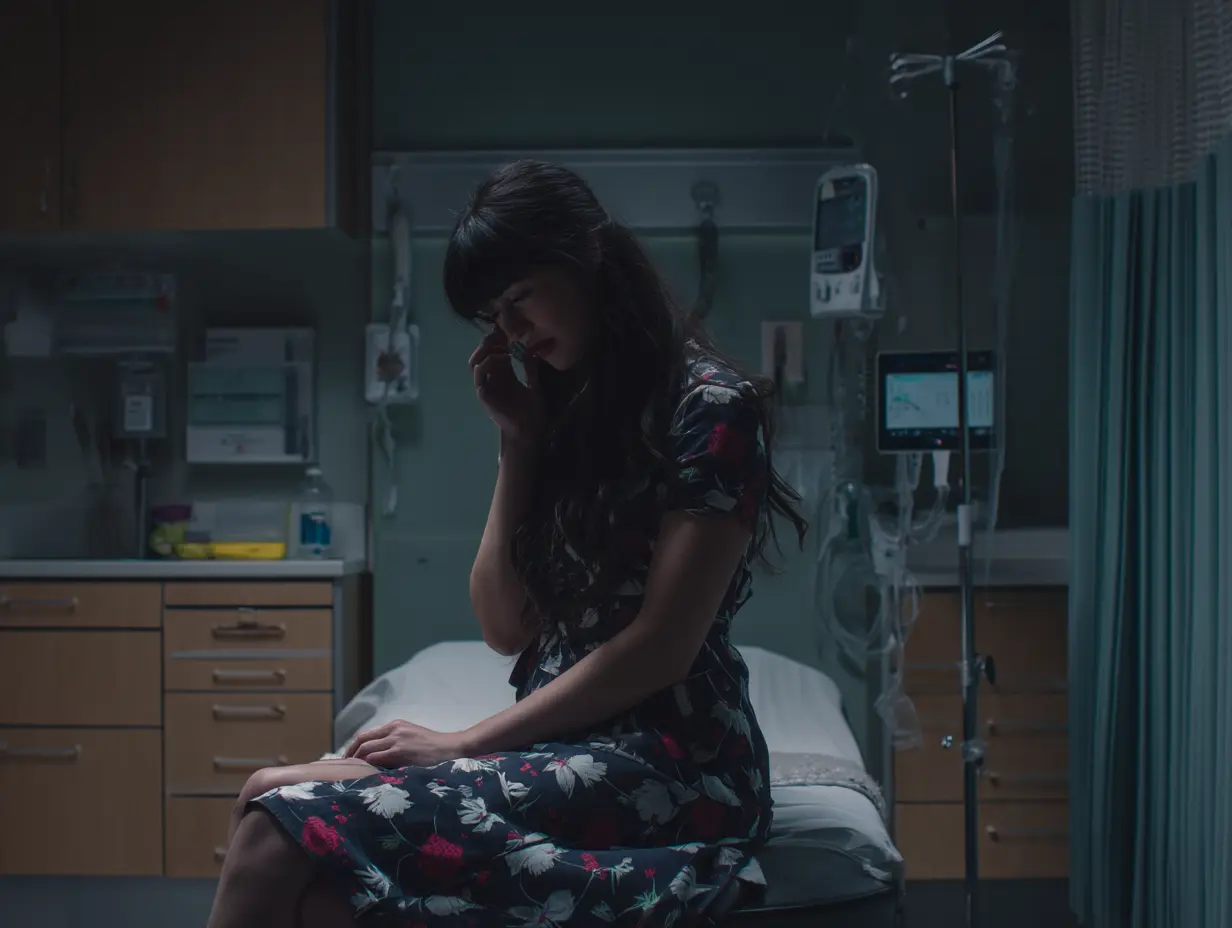
Carrie collapsed into the chair beside Mike, crying—not from guilt, not from anger, but from a relief so sharp it hurt. Eleanor hadn’t meant to harm her. Love, it turned out, wasn’t always enough. “Repeated exposure,” the doctor explained quietly. “Small amounts. Over time. Enough to cause fever, lethargy, appetite suppression. Especially in a child her size.”
Mike sat very still as the words settled. His hands were shaking now, openly, and he didn’t try to stop it. He pressed his palms together, bowed his head, and cried—not loudly, not dramatically, but with the broken restraint of someone who had been holding himself together for far too long.

“She wasn’t harmed intentionally,” the doctor continued. “No one poisoned her. But she was exposed. And her body couldn’t handle it.” Carrie collapsed into the chair beside Maxine’s bed, one hand flying to her mouth. She cried too—quiet, shaking sobs—not from guilt or anger, but from the overwhelming relief of knowing their daughter was going to be okay.
It hadn’t been malice. It had been certainty. Eleanor had trusted what she knew. Too much. Long-held habits, passed down without question. Love, layered with confidence, layered with routine. And none of it had been enough to keep Maxine safe.

Mike went to Eleanor’s house himself. She was sitting at the kitchen table when he arrived, hands folded, eyes red, waiting. She stood the moment she saw him, words spilling out before he could speak. “I didn’t know,” she said. “I swear to you. I would never—”
“I know,” Mike said, surprising himself with how steady his voice sounded. “That’s why I’m here.” She broke then. Not defensively. Not angrily. Just openly—grief and fear and shame collapsing into one. Mike sat across from her and waited until she could breathe again.

Back at the hospital, Eleanor didn’t rush to Maxine’s bedside. She stopped in the doorway, afraid of doing even that wrong. It was Carrie who took her hand and placed it gently over the blanket. “She needs you,” Carrie said softly.
Maxine’s laughter came back slowly.At first, it was just sound—soft, uncertain, like she was testing whether the world was safe enough to make noise again. Then it grew louder. Sharper. By the time spring settled in, she chased pigeons in the park and demanded snacks with the fierce confidence of a child who felt strong in her body again.
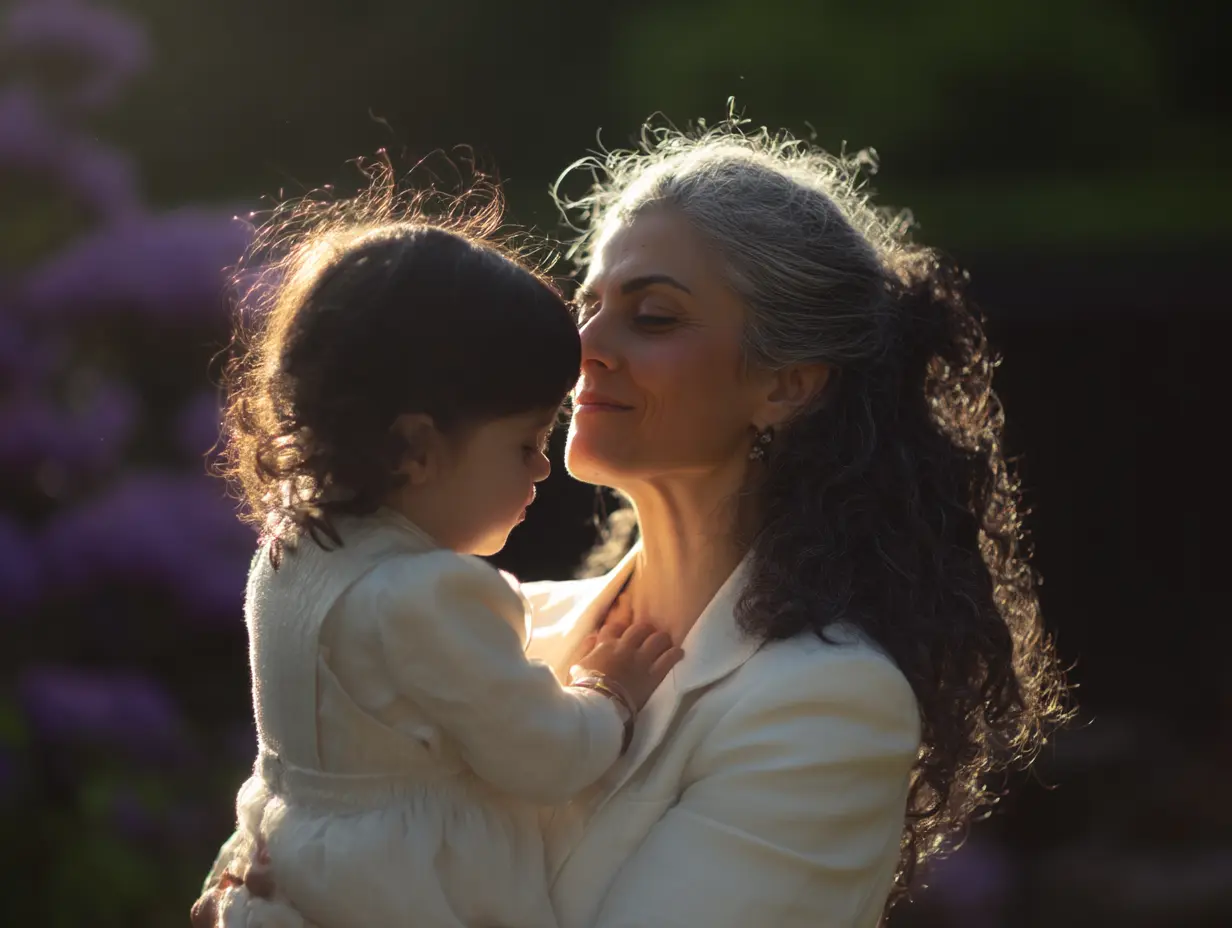
They changed things after that. Shoes stayed on outside. Hands were scrubbed clean before meals. The garden was fenced, the soil turned and replaced. Eleanor followed every rule without question now, watching instead of guiding, asking instead of assuming. Love, this time, came with listening.
Some nights, Mike still woke to check Maxine’s breathing. Some days, Carrie caught herself counting meals, counting hours, counting signs that everything was still all right. But slowly, the fear loosened its grip. They had learned something none of them would forget.
That love doesn’t protect on its own. That certainty can be dangerous.And that paying attention—really paying attention—is sometimes the only thing that keeps a child safe. Maxine grew. And this time, they grew with her.
Top Articles