
A crowded public bus can often be a microcosm of society—a tense, crowded space filled with tired commuters, busy parents, and teenagers all simply trying to make their way home. On a hot evening in Fort Worth, Texas, an ordinary bus ride turned into a dramatic and unforgettable lesson about judgment, invisible disabilities, and the lasting power of empathy.
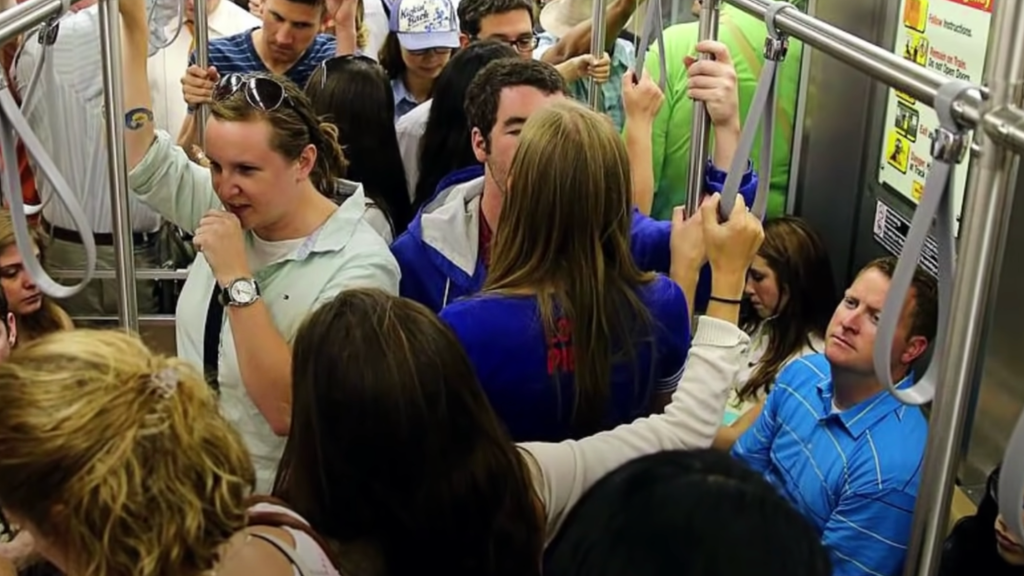
Thomas Scott, a hardworking grocery store employee, was settling in for his daily commute after an exhausting 11-hour shift. The bus was far busier than usual, but he managed to snag a seat near the back. Glancing around at his fellow riders, his attention drifted to a stylish teenage boy sitting a few rows away. The teen, dressed in a dark hoodie and chunky sneakers with an earbud tucked into one ear, was sitting in one of the seats specifically designated for elderly passengers, pregnant women, and people with disabilities. To anyone watching, the boy appeared perfectly healthy, relaxed, and completely unbothered by the growing crowd around him.
At the next stop, a mother boarded the bus holding the hands of her two young children. Sweeping her eyes across the crowded aisle, her gaze locked onto the teenager occupying the priority seat. Her face immediately tightened with visible irritation. To her, it seemed like a clear-cut case of modern disrespect—a healthy, able-bodied youth refusing to yield his spot to a mother traveling with small children. The teenager kept looking out the window, seemingly oblivious to her burning gaze, which only fueled the woman’s anger further.
Unable to contain her frustration, the mother marched down the aisle and confronted the teenager directly, stopping right in front of his seat. Speaking in a sharp, elevated voice that instantly captured the attention of every passenger on board, she demanded that he hand over the seat. She asked him if he had any manners at all, reminding him that he was occupying a space reserved for vulnerable people and insisting he should have stood up the moment she stepped onto the vehicle.
The bus fell into an uncomfortable, suffocating silence. Even the bus driver kept a close eye on the rear-view mirror, anticipating a heated altercation. Passengers shook their heads in disapproval, assuming the quiet, unimpressed teenager was simply being defiant. Sitting nearby, Thomas felt his heart race, fearing the tense confrontation might escalate into something dangerous.
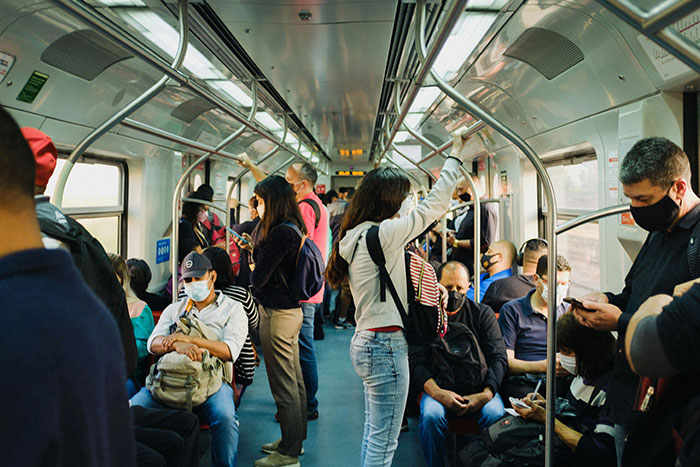
Slowly, the teenager stood up. The woman smirked, assuming her public shaming had successfully forced him into submission. But without saying a single word, the boy reached down, grabbed the hem of his loose-fitting denim jeans, and yanked the fabric upward to his knee.
An audible gasp echoed throughout the bus, followed by a wave of horrified silence.
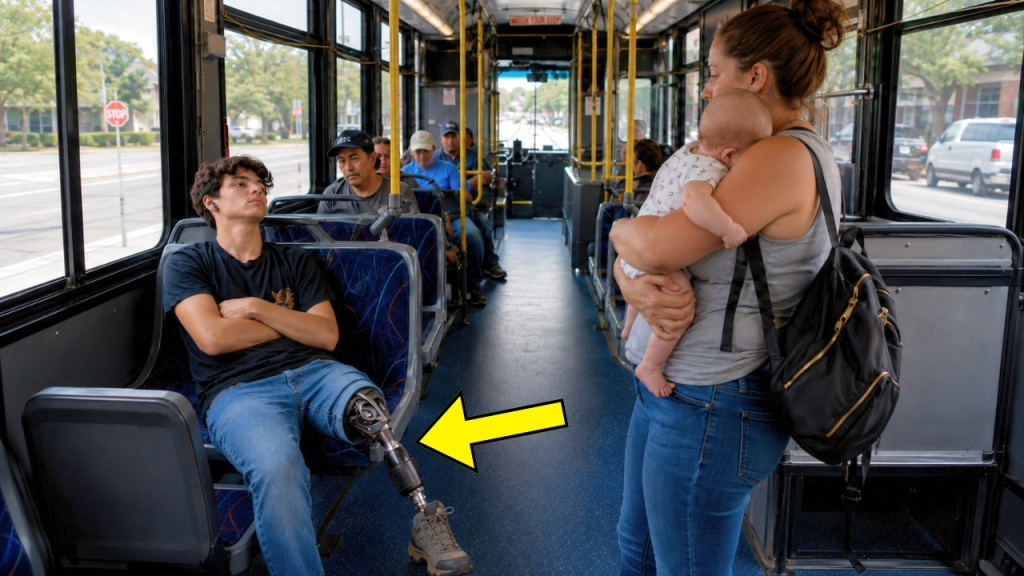
Kicking his leg slightly forward, the boy revealed a metal prosthetic limb extending down to his shoe. The crowd realized in an instant that the “healthy” teenager had been using the designated seating for a genuine, life-altering condition that was hidden beneath his everyday clothes.
The mother’s smug expression instantly vanished, replaced by deep, burning embarrassment. Completely speechless and stripped of her moral high ground, she retreated quietly back toward the front of the bus without uttering another word. The teenager calmly adjusted his pant leg, sat back down, and stared ahead, clearly shaken by the humiliating ordeal he had just been forced to endure to justify his presence.
Watching the scene unfold, Thomas felt a knot form in his stomach. His own brother was a military veteran and an amputee, and the thought of his brother being publicly humiliated on a bus hit deeply. Wanting to break the heavy tension and validate the young man, Thomas called out across the quiet bus, praising the cool design of the prosthetic leg and calling out the woman’s unfair judgment.
Thomas’s words broke the spell. Suddenly, a wave of warmth and support flooded the bus. Surrounding passengers chimed in with encouraging words, patting the young man on the shoulder and offering sincere apologies for what he had just experienced. The visible shame on the teenager’s face slowly faded, replaced by a grateful smile.

Before reaching his stop, Thomas walked over and sat beside the boy. He shared the story of his brother, who had overcome similar challenges to compete in adaptive sports, and offered his phone number so the teen would have someone to talk to who truly understood his reality. The young man’s eyes lit up—he admitted he had never personally known another amputee and often felt isolated in his daily struggles. The two exchanged contacts and later met up, forging a genuine friendship out of a moment of deep conflict.
Ultimately, the encounter served as a stark, powerful reminder that not all disabilities are immediately visible. Conditions, physical prosthetics, and chronic illnesses are frequently hidden beneath ordinary clothes and healthy outward appearances. True compassion requires stepping back from knee-jerk assumptions and approaching every stranger with patience and understanding, because nobody ever truly knows the weight someone else is carrying beneath the surface.
Top Articles