
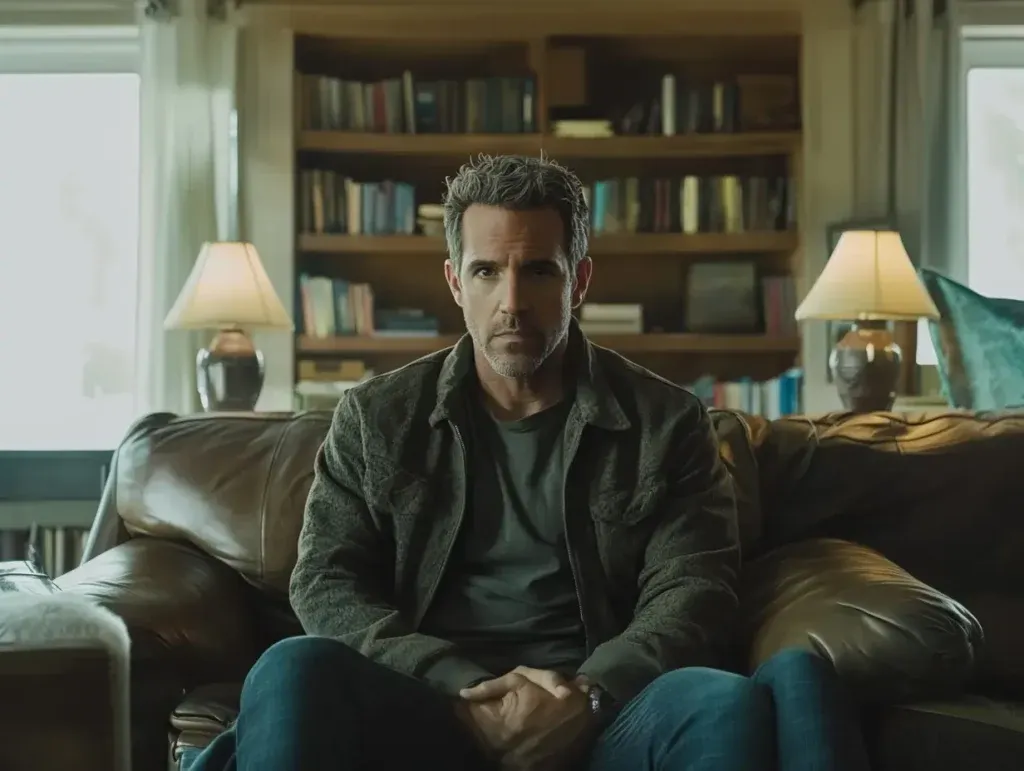
Julian’s decision to remain “blind” transformed his home into a laboratory of observation. He moved with the practiced clumsiness of a man in the dark, but behind his clouded expression, he was cataloging every detail.
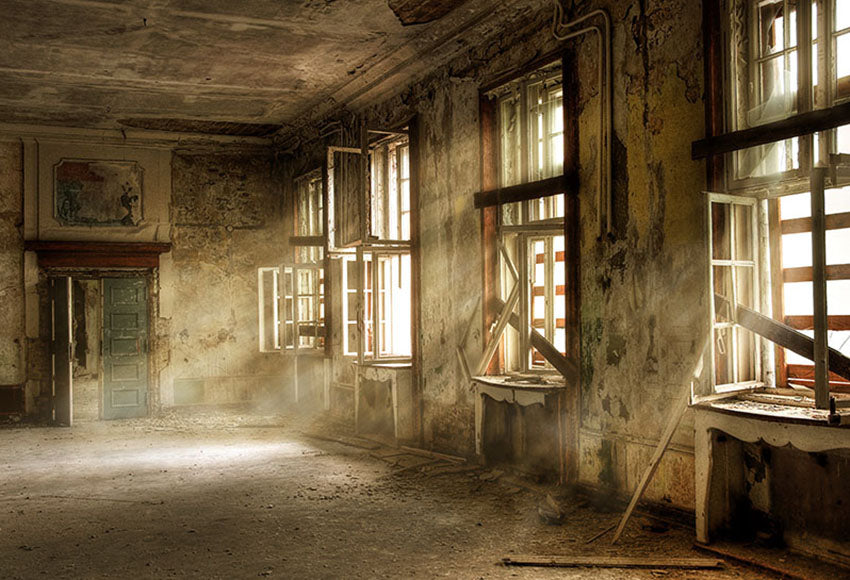
The house was not the sanctuary he had imagined. He noticed the jagged cracks in the ceiling, the thick layers of dust on the “family” photos, and—most unsettlingly—the strange, dark stains on the basement doorframe. The vibrant home his wife, Sarah, had described for years was a lie. The wallpaper was peeling like dead skin; the furniture was sparse and mismatched.
His newfound vision turned the mundane into the macabre. Every shadow cast by the afternoon sun felt like a threat. He began to wonder: If she lied about the color of the walls, what else has she rewritten?
Sarah remained entirely unaware of the witness in her kitchen. She moved with a grace that Julian found terrifyingly efficient. He watched her from the sofa, his eyes “staring” at nothing, while actually tracking her every move.
She sang softly while she worked, a melodic humming that used to soothe him. Now, it sounded like a siren’s call. He watched her dump a handful of pills into his morning coffee—pills he didn’t recognize, in a dose he hadn’t been prescribed. He drank it, then later forced himself to vomit in secret, his heart hammering against his ribs.
He followed her with his eyes as she drifted through the house, realizing that the woman he loved was a complete stranger. Her smiles never reached her eyes when she looked at him. She looked at him not with affection, but with the cold calculation of a zookeeper tending to a caged animal.
Top Articles