
Entertainment Story
By Tenupdates Editorial Team
April 10, 2026

The Invisible Pillar
For two years, my life followed a rigid, unpaid rhythm: 7:00 AM arrivals, crustless sandwiches, and the endless wiping of sticky fingers. I was the silent engine powering my son’s high-octane life. Marcus and his wife, Sarah, called me their “saint” and “the glue holding us together.” But words are cheap. When a series of home repairs left me short on my mortgage and I asked Marcus for a modest bridge loan, the mask slipped.
“You aren’t an employee, Mom,” he’d said, barely looking up from his laptop. “You do this because you love the kids. You’re owed nothing for being a grandmother.”
The sting was cold and sharp. As I stood in their kitchen the following morning, I watched the chaos I usually managed with a quiet, new perspective. They had no idea the “glue” had already decided to stop sticking.
The Morning Standard

“Blueberry waffles, Gran!” Leo chirped, banging his fork on the table while his sister, Maya, stared blankly at a cartoon. I moved with practiced grace, pouring juice and flipping waffles, masking my hurt behind a gentle smile. I was a ghost in a house I spent forty hours a week maintaining.
While they ate, I pivoted to the counter. The lunchboxes were a ritual of mine. I didn’t just pack food; I packed comfort.
The Secret Notes

“What did you write today?” Maya asked, her curiosity finally breaking through her morning fog. I just winked, sliding a small, hand-drawn heart into her bag. I had always wanted them to feel like someone was in their corner—even if their parents were too busy conquering the corporate world to notice the small things. I tucked an extra treat into Leo’s bag, a silent goodbye he didn’t yet understand.
A Cold Connection

After the school run, I stopped by Sarah’s office under the guise of a quick lunch. I wanted to see if there was any remorse, any crack in the entitlement.
“It’s just relentless,” Sarah sighed, scrolling through her phone as she picked at a salad. “The regional manager is breathing down my neck, and the nanny market is a nightmare right now. Honestly, I don’t know how people survive without free help.”
“It is a lot of work,” I said softly.
She laughed, a dry, distracted sound. “Well, at least you enjoy it. It keeps you busy, right?”
I nodded, keeping my secrets tucked away. She had no clue that the “free help” was about to become the most expensive lesson of her life
The Breaking Point

That evening, Marcus called before I could even leave. “Hey, Ma. Late strategy meeting. We’re going to be a few hours. Just feed the kids and put them down, okay? You’re a lifesaver.”
He didn’t wait for an answer before hanging up.
I spent the evening in a blur of domestic labor. I made a rich bolognese, the steam filling the kitchen with a warmth that felt increasingly hollow. When Marcus and Sarah finally trudged through the door at 8:00 PM, they didn’t see me. They saw a service. They walked past me, debating quarterly projections, their coats hitting the floor for me to pick up.
“I thought we could all have a late dessert together?” I suggested, gesturing to the table I’d set.
Sarah didn’t even turn around. “Actually, we’re exhausted. We just need some ‘us’ time to decompress. Thanks for everything, though.”
The door to their study clicked shut. I stood there, dish towel in hand, realizing I had become part of the architecture—functional, necessary, and completely ignored.
The Final Weekend

On Saturday, I took Leo and Maya to the park one last time. I watched them race for the swings, their laughter echoing in the crisp air. I soaked in every second of their joy, memorizing the way the sun hit their hair.
“Higher, Gran! Push me higher!” Leo shouted.
As I pushed him, I looked at my watch. In forty-eight hours, Marcus and Sarah would wake up to an empty kitchen, an empty schedule, and a very loud realization of what “nothing” actually looks like.
The Weight of Invisibility

When Maya finally settled onto the swings, she shouted, “Higher, Gran!” I leaned into it, pushing her toward the sky until her giggles turned into those breathless, delighted squeals that usually made my heart melt. In those moments, the fresh air and the pure joy of the kids managed to push back the cold weight of Marcus’s words. For a few seconds, I wasn’t a “free service”—I was just a grandmother.
The playground became their kingdom. Leo spent an hour daring the slide backward while Maya played the role of his cheering section. But as the shadows lengthened and the sun began to dip, the reality of my life returned.
The Shifting Ground

Sarah pulled up to the curb, her engine idling impatiently. “Thanks for keeping them busy, Martha,” she said as she stepped out. Her voice sounded sincere, and for a moment, a small spark of warmth flickered in my chest.
But as I watched them load the kids into the car, I felt the tectonic plates of our relationship shifting. I wasn’t being treated as a matriarch; I was being treated as a reliable utility—like electricity or running water. You only notice it when it’s turned off. As their taillights vanished into the dusk, I realized that if I ever wanted to be seen again, I had to be the one to flip the switch.
The Decision

The silence of my own home that night was the final catalyst. There was a strange, deep relief in deciding to act. It wasn’t about being cruel; it was about survival. If I didn’t spark this change myself, I would eventually disappear entirely into the background of their lives. My plan didn’t need to be loud or dramatic. It just needed to be a firm, silent declaration of my own worth.
Monday’s Routine
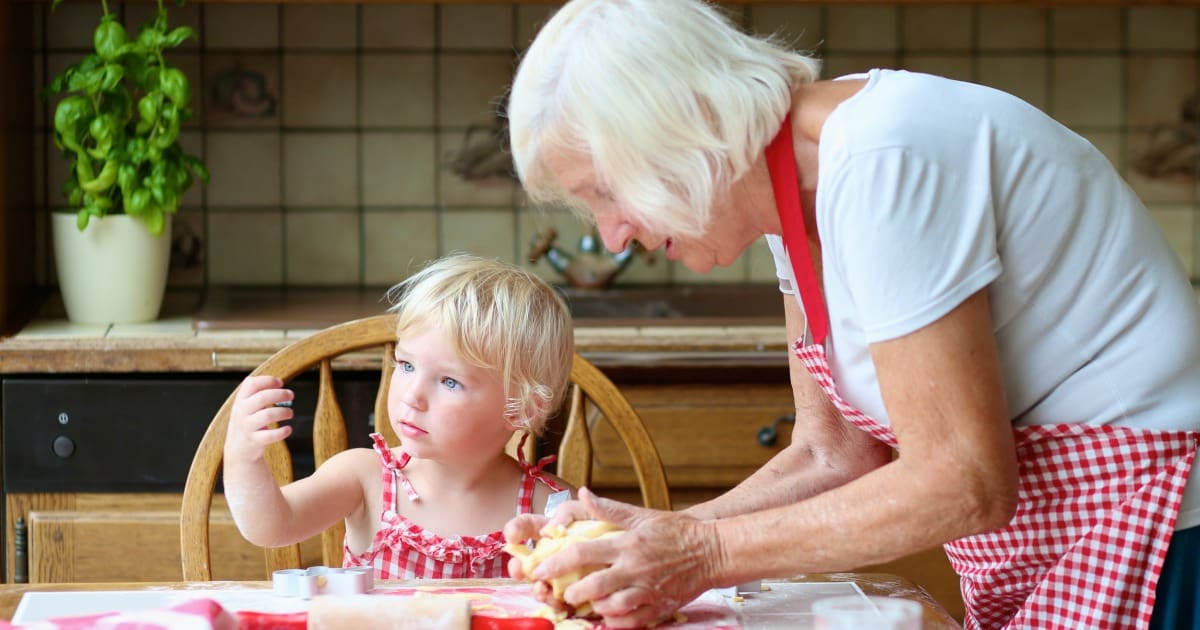
Monday arrived with its usual demands. I spent the morning in the grocery store aisles, moving on autopilot through the “everyday essentials” that kept Marcus and Sarah’s household ticking. My mind, however, was miles away, mapping out a disruption—something just jarring enough to make them pause.
Midway through the produce section, I ran into an old friend, Evelyn. We swapped stories for a moment before she looked at me with a knowing, tired kindness.
“Martha,” she said, her hand on my arm, “you have to start thinking of yourself. You’re pouring from an empty cup.”
Her words echoed in my head the entire drive home. Every familiar landmark I passed only strengthened my resolve. A subtle shakeup wasn’t just necessary for me—it was necessary for them. They needed to remember what it felt like to actually carry the weight of their own lives.
The Quiet Rebellion
:strip_icc()/GettyImages-1486049233-60232144e13f48749ffd44aea5c4a428.jpg)
Back at their house, the laundry mountain awaited. I folded the tiny shirts and matched the socks with a practiced, robotic ease before moving to the kitchen to prep a roast. But beneath the scent of searing meat and rosemary, the plot was thickening.
The next morning, the “Morning Blur” was in full effect. Marcus and Sarah were ghosts in expensive suits, rushing past the breakfast table with whispered apologies and eyes glued to their phones. They didn’t see the sticky juice spill I wiped up; they didn’t see the way Maya’s hair needed brushing. I was just the background music to their frantic race against the clock.
The Balancing Act

Tuesday brought a new set of hurdles. Leo woke up with a raspy throat and a red face, complaining of a cold. I spent the morning in a frantic balancing act: bundling Maya into the car for her ballet recital while keeping Leo hydrated and entertained with cartoons and soup.
“Gran, look! I’m a swan!” Maya twirled on her tiptoes, begging for my attention.
I pirouetted with her, one hand holding a thermometer and the other a ballet bag. It was a dance of exhaustion that Marcus and Sarah never saw—a performance they took for granted. As I smoothed Maya’s leotard, I looked at the calendar on the fridge.
The “Lesson” was no longer a plan. It was an inevitability.
The Shadow in the Hallway

Managing Leo’s fever while navigating the post-office line was a masterclass in endurance. “You okay, Gran?” Maya asked, her small hand slipping into mine as we waited. That tiny, unprompted moment of empathy was a sudden balm to my spirit—a sharp contrast to the adults in her life who seemed to view my energy as an infinite resource.
The Invisible Bridge

I spent the afternoon bouncing between the pharmacy and the produce aisle, wondering if Marcus or Sarah ever paused to think about how the milk appeared in the fridge or how the medicine found its way to the nightstand. I was the bridge between their “perfect” careers and their functional home, yet they crossed me every day without ever looking down at the planks.
The front door finally swung open, and Sarah blew in like a gale-force wind. She was mid-sentence on a work call, tossing her keys onto the counter I had just polished. She gave the kids a distracted kiss and threw a “Thanks, Martha!” over her shoulder as she headed for the stairs.
I stood there, a shadow in my own son’s home, waiting for a question about Leo’s cough or Maya’s day. It never came.
The Bouquet of Oversight

Marcus arrived an hour later, hidden behind a massive bouquet of vibrant daisies.
“Look what I got for you, babe!” he announced, handing them to Sarah as she came back down. They stood in the kitchen, a portrait of a successful, loving couple, while I stood three feet away, holding a dirty dish towel.
I felt like a faded photograph—present in the room, but no longer part of the living memory. They celebrated their “wins” while I was the steady breeze that kept their kite flying. Without me, they would have hit the ground months ago, yet they didn’t even notice the wind.
The Script Begins to Flip

My patience was a threadbare cloth, but I kept my mask on. I cleaned the dinner plates, checked Maya’s spelling words, and tucked Leo into bed.
“Love you, Gran,” Leo whispered, his eyes heavy with sleep.
“Love you too, sweetie,” I replied, my voice steady despite the rebellion brewing in my chest. Each night was starting to bleed into the next, a loop of service that I was finally ready to break.
Wednesday’s Hidden Notes

Wednesday morning started with the usual assembly line of sandwiches and juice boxes. I tucked the notes into their lunches as always, but my handwriting felt different—sharper, more intentional.
As the mid-morning sun warmed the kitchen table, I did something I hadn’t done in years: I opened a notebook and wrote down a schedule for myself.
I penciled in “Coffee at the park,” “Visit the library,” and “Afternoon nap.” I wasn’t just listing errands anymore; I was reclaiming my time. Every stroke of the pen felt like a small spark of mutiny.
The Breaking Point
:max_bytes(150000):strip_icc()/GettyImages-644162821-599a3be2d088c000112926e5.jpg)
My phone buzzed. A text from Marcus: “Hey, can you grab dog food and some wine for the dinner party Friday? You’re the best.”
“Of course,” I typed back, my thumbs steady. “I’ll handle it.”
But as I watched the kids at their art class later that afternoon, the truth felt heavy in the room. They didn’t see a mother or a grandmother; they saw “free help.” The kids’ drawings were full of vibrant color and life, unaware of the gray resentment beginning to coat my heart. I knew then that I couldn’t ignore the sting any longer. The script was poorly written, and I was the only one who could provide the edit.
Thursday’s Final Echo

By Thursday, the weight of the routine felt physical. The breakfast rush, the lunch prep, the school runs—it was a machine, and I was the only part that needed oiling.
“Maya, your lunch!” I called out as she hurried to the car.
I moved through the day like clockwork, but the gears were grinding. Beneath the surface, the monotony was teetering on a jagged edge. Marcus and Sarah were still living in the illusion that this would last forever.
I looked at the house—the clean floors, the folded laundry, the stocked pantry—and I smiled. It was the last time it would look like this. The storm wasn’t coming anymore; it was already here.
The Weight of the Crutch
:max_bytes(150000):strip_icc()/manphonecomputer-8784467668554b54b7cfd599361946c8.jpg)
Marcus sat in the living room, his voice booming as he navigated a conference call. He spoke of “efficiency” and “sustainability,” while I quietly scrubbed the grout in his kitchen. I looked at him, hoping for a moment of eye contact—a silent acknowledgment that his professional world only turned because I was holding the domestic one still. But his gaze never left his screen.
The Fraying Edge

“Mom, can you keep the kids until seven?” Sarah asked later, her voice thin with simulated apology. “We’re just slammed.”
“Of course,” I replied. The word darling felt heavy on my tongue. I settled Maya with her books, watching the orange sunset bleed into a cold gray. I was watching the literal and metaphorical light fade on this arrangement. As I folded the final load of laundry, the outlines of my plan became as crisp as the creases in Marcus’s dress shirts. I wasn’t just a helper anymore; I was a woman planning an exit.
The Simmering Friday

Friday morning felt different. Beneath the sizzle of pancakes, a new energy hummed in my veins.
“Jake, don’t forget your library book!” I called out, my voice steady while my mind drifted to visions of a quiet beach and a phone turned firmly off.
Marcus gave me his standard, autopilot “Thanks, Ma,” as he grabbed his coffee. It wasn’t gratitude; it was a habit, like checking the mail. I met it with a hollow smile, savoring the secret that I was about to break his routine into a thousand pieces.
The Accidental Truth

As I tidied the entryway that afternoon, I caught Marcus and Sarah whispering in the study.
“I don’t know what we’d do if Mom actually took a vacation,” Sarah’s voice floated through the cracked door. “Everything would just… stop. We can’t afford for her to stop.”
“She won’t,” Marcus replied dismissively. “She loves being needed. It’s her whole identity.”
The words hit me like a physical blow. I wasn’t a beloved matriarch; I was a structural necessity they assumed had no feelings of its own. I was the crutch they leaned on while claiming they were walking solo.
The Map to Freedom

Standing in the hallway, the realization was absolute: I had become background noise in my own son’s life. They didn’t value me; they were merely afraid of losing the convenience I provided.
That evening, I didn’t clean the kitchen to my usual standard. Instead, I sat with a notepad and a steady hand. I researched flights, booked a charming seaside cottage, and mapped out a full week of “nothing.”
It wasn’t an act of bitterness. It was an act of reclamation. It was time for Marcus and Sarah to learn that “nothing” is exactly what you get when you treat a person like a permanent fixture.
The Silent Exit

I spent Sunday evening watching them like an observer from another planet. As we sat around the table, I casually mentioned a friend’s recent solo trip. “Imagine just leaving it all behind for a week,” I mused.
Lisa laughed, pouring herself more wine. “You deserve a rest, Mom,” she said, though her eyes never left her plate. She said it as a platitude, an easy phrase to keep the “help” happy. David didn’t even look up from his laptop. “Parenting is a breeze when you’ve got a ringer like Nana in the game,” he joked to his coworkers on Slack.
The irony was so thick it was almost poetic. They were laughing at the very foundation they were standing on, completely unaware that the ground was about to vanish.
Monday: The Blank Canvas

I woke up at 5:00 AM, but not to pack lunches or hunt for missing socks. I dressed in my favorite travel outfit, the one I usually saved for “someday.” I didn’t feel guilt; I felt a surge of adrenaline.
I scribbled a note—Gone for a bit. Be back soon.—and left it on the polished kitchen island. I didn’t mention where. I didn’t offer instructions on how to operate the washing machine or remind them that it was Leo’s library day. Those were no longer my problems.

By 7:30 AM, I was at the bus stop. As the city bus pulled away, I watched the familiar suburbs shrink in the distance. For the first time in two years, my time belonged to me. The thrill was electric.
The First Ripple

The first call came at 8:15 AM. It was Lisa, her voice already pitched an octave higher than usual.
“Mom? Where are you? The kids are awake and I can’t find the permission slips for the field trip. Are you at the store?”
I didn’t answer. I let it go to voicemail. I could almost hear the frantic sound of cupboards opening and closing in the background of her confusion. The “safety net” had been pulled back, and the freefall had begun.
The Cascade of Chaos

From my seat by the window, I imagined the minor disasters unfolding in real-time. The forgotten lunches sitting on the counter. The mismatched socks. The realization that the “magic” that kept their lives running was actually a sixty-five-year-old woman with a sore back.
By noon, David was calling. He sounded less like a confident executive and more like a man drowning in a storm of his own making. “Mom, please call us. We’ve had to cancel three meetings. We can’t find the spare car seat, and Leo is crying for his specific blue thermos.”
I sipped a coffee in a quiet cafe three towns away. It was a strange, bittersweet satisfaction. I loved my grandchildren, but Marcus and Sarah needed to understand that love isn’t a debt to be exploited.
The Lesson Begins

Every frantic text and panicked voicemail was a data point in a very expensive lesson. Without me to catch the small mishaps, the day was collapsing under its own weight. David was scrambling to find emergency daycare; Lisa was juggling work calls while trying to navigate a kitchen she barely understood.
They were finally facing the whirlwind alone. The “steady presence” they took for granted was gone, and for the first time, they were seeing the true cost of “nothing.”
The Weight of the Space Left Behind

By Tuesday, the “minor inconveniences” at home had snowballed into a structural collapse. From afar, I watched their frantic attempts to reach me through a barrage of missed calls. Every voicemail was a snapshot of their unraveling: misplaced shoes, burnt dinners, and the sheer exhaustion of managing two children without a silent partner.
The Voices of Regret
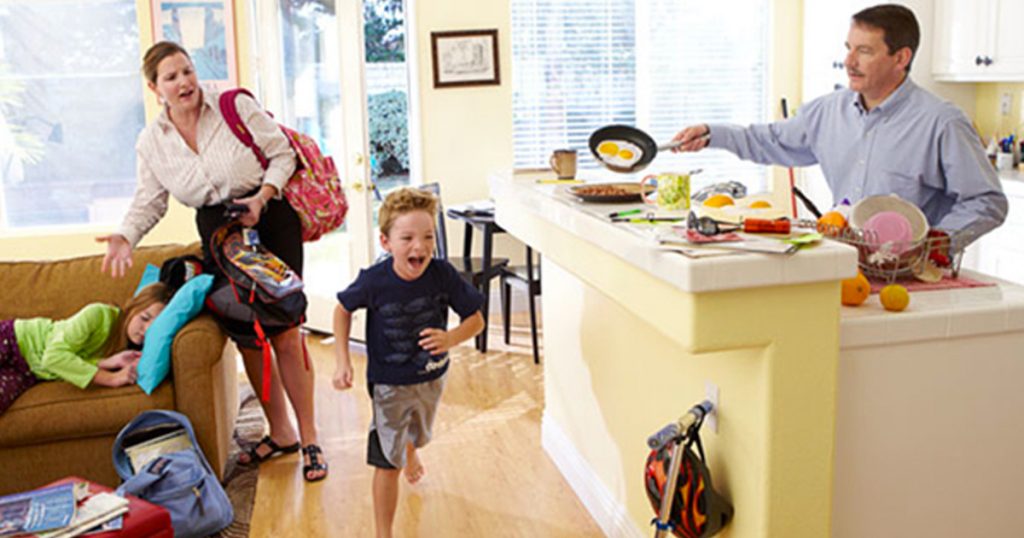
Lisa’s voice on my messages shifted from confusion to a raw, panicked sincerity I hadn’t heard in years. “Mom, please call us. We’re sorry,” she pleaded in a Tuesday night recording. “We realized today how much we took for granted. We’ll change everything, I promise. Just tell us you’re okay.”
Even David, usually so detached, left a message that sounded broken. “Mom… we had no idea. I had to cancel four meetings today just to handle the school run. You aren’t just help—you’re the only reason we function. We’re so sorry.”
Hearing them finally “turn on the lights” to see the labor I had provided for years brought a bittersweet satisfaction. My absence was the loudest thing I had ever said.
The Heart of the House

While the adults scrambled, little Maya spent her week drawing. When I finally walked back through their front door on Friday evening, she ran to me with a stack of crayon masterpieces. “It’s you, Nana!” she cried. In her drawings, I wasn’t a shadow or a service; I was the central figure, the one holding her hand, the one with the biggest smile.
The kids’ joy was expected, but the reaction from Marcus and Sarah was the real change. They didn’t just offer a hurried “thanks.” They stood there with a quiet, humbled respect. They looked tired—truly tired—in a way that showed they finally understood the weight I had been carrying for them.
A New Foundation

That night, they didn’t retreat to their “us time.” Instead, they insisted on taking me to a celebratory dinner.
“You’re not our unpaid babysitter, Mom,” Marcus said, looking me in the eye as we sat at the table. “You’re the heart of this family. We were blind, and we were selfish. From now on, things are going to be different. We’ve already looked into part-time daycare to give you your life back.”
The shift was palpable. The air between us was no longer thick with entitlement, but light with genuine gratitude. I had gone away a “convenience” and returned a matriarch. The lesson had landed: I was no longer a permanent fixture of the house—I was a person who chose to be there. And for the first time in a long time, I felt truly seen.
Top Articles